Showing posts with label society. Show all posts

Tuesday, November 07, 2017

What Does Diversity Bring to the Table?


I hate getting into arguments. As a middle child and a people pleaser, I try to steer conversations away from controversial topics if I sense they will get heated. I don't like offending people, and my empathy easily extends to those I both agree and disagree with. I will happily engage in lighthearted debate with friends, and with some people I'll even engage in earnest debates, if I know them well enough to be confident there will be no hard feelings. But with strangers or people who might get easily upset, I avoid hot topics like the plague.

This isn't always a positive thing. Sometimes it means I let things slide that I shouldn't. I often hear mildly racist, sexist or homophobic comments, and to avoid conflict, I perhaps keep my mouth shut too often. Especially in polite company, where I don't want to come off as argumentative. But the other night, after hearing someone (a rich white male) rhetorically and contemptuously ask, "What's the point of diversity? What does it bring to the table?", I couldn't keep my mouth shut. I launched into all the reasons why diversity is necessary, especially in my work with the Red Cross, where it is imperative that all communities are represented and no one is forgotten or overlooked. Surprisingly, but not so surprisingly, the conversation took an ugly turn at that point, and some of the most egregious racist and white privilege rhetoric was spewed, and needless to say the conversation did not end well. No regrets though. Sometimes arguments just can't and shouldn't be avoided.

So why is diversity important? For what I do, diversity is of utmost importance if we want to be sure we are accomplishing our mission to serve all people regardless of race, ethnicity, gender, sexual orientation, religion, ability, income or geography.* That point was driven home to me in an illuminating way this morning in a meeting with the Arkansas State Independent Living Council (ARSILC).

The meeting had actually been arranged to discuss diversity and inclusion days before the aforementioned interaction. My goal for this meeting was, in retrospect, very narrow though. I wanted to talk about how to include more people with functional and access needs in workplace employment and volunteerism. But before my volunteer counterpart and I could even start talking about hiring practices, the executive director for ARSILC dove into the importance of creating an emergency preparedness action plan for people with disabilities. She began talking about all kinds of disabilities, from mobility needs to hearing and seeing impairment to developmental delays and autism. As she continued detailing all the ways in which existing disaster preparedness education could be developed to include those with disabilities, I became increasingly aware how narrow my perspective on people with "functional and access needs" really was.

For all my talk about diversity and inclusion - making sure diverse populations are being represented "at the table" so we can better serve all people - the thought of how we are serving those with disabilities never really came to my mind. Sure I'd gone so far as to consider and evaluate our hiring practices, but I hadn't actually thought about the people we serve during times of disaster - the adult with Down Syndrome who lives independently with the assistance of caregivers during a tornado or the children in wheelchairs or with hearing impairment when a smoke alarm goes off in the middle of the night due to a house fire. How are we including those people in our plans and preparedness outreach? Have we brought The Pillowcase Project to the schools for the deaf and blind? What about Pathfinders? We do provide special smoke alarms for the hearing impaired, but have we made a targeted effort to make sure those who are deaf or hearing impaired know of this free service? Should we get hit with a huge disaster of Hurricane Harvey proportions (an earthquake along the New Madrid fault line, for instance), have we considered how people with disabilities fit into our emergency action plans? When food is air dropped into a disaster zone, have we thought about how the elderly or other people with mobility issues are going to get to access that food?

I am ashamed to admit that these thoughts had never crossed my mind. Surely they have crossed the minds of others within the organization, but from our every day practices locally, this has certainly not been a priority as far as I can tell.

And this is just one example of what diversity brings to the table. Having representatives from communities and populations that I and others like me have limited or no access to means we can make sure no one is being forgotten. A few months ago, I had a similar conversation with the owner of Hola! Arkansas on how we can better reach Hispanic and Spanish-speaking populations to make them more aware of our services and provide better disaster preparedness education to them. During my recent deployment in Florida, I worked with Spanish- and Creole-speaking populations where the need for bilingual volunteers became vividly apparent. Without exposure to and representation from people unlike ourselves, we can easily become entrenched in our own perspectives only. And in some industries more than others, that entrenchment can be detrimental and have very real life-altering consequences.

The most shocking thing that was said to me during that argument the other night was "And why do you care?" Being that I'd shaped the context of the argument around the mission of the Red Cross - providing humanitarian services, something surely everyone would agree upon - I was dumbfounded that this was even asked. I could barely conceive of an answer more basic than to reply, "Because they're people!" Diversity and inclusion aren't just trendy buzzwords. In my line of work especially, they don't just refer to hiring x number of black people, LGBT people and people of various religions (which by the way is a faulty understanding of affirmative action, which is not about "quotas", but that's another topic for another day). They refer to making sure all people have the same access to the life-saving preparedness education and disaster response services we provide. It's about caring for all human beings, no matter what they look like, where they come from or how they act. It's about basic humanitarianism, plain and simple.

Placing a focus on diversity and inclusion isn't about checking a politically correct box for us at the Red Cross; it's about literally saving lives. Even if there were nothing else diversity could "bring to the table", that alone would be enough. (Of course, that's not all that it brings - pulling together varied and colorful people from all walks of life and all backgrounds makes every company, organization and individual better and more successful, not to mention how profoundly it can enrich the lives of everyone involved.) I'm thankful that more and more people are starting to understand all the brilliant and illuminating things diversity brings to the table. And with those that don't see that yet, I guess I'll be engaging in more awkward conversations.


*The seven fundamental principles of the American Red Cross (and the International Committee of the Red Cross - ICRC) are perhaps what make me most proud of the organization I work for and how we pursue our mission to prevent and alleviate human suffering in the face of emergencies. As an atheist in the Bible belt, I'm very passionate about impartiality and neutrality in particular! Maybe those are a subject of another blog post. 

Sunday, January 08, 2017

Sunday Sermon: Give Blood and Save a Life


The first place I ever gave blood was in the Fine Arts Auditorium at my high school, when I was a junior or senior. I felt proud to be a part of something that felt bigger and more important than me. I went on to give blood any time there was a blood drive, usually on the high school or college campus.

After college, I didn't get the chance to donate for a while due to a series of temporary deferments - tattoos, piercings, pregnancy. I mistakenly believed I couldn't give while breastfeeding as well, though that turns out to have been untrue.

It hadn't occurred to me to give blood again until I moved back to the US in 2013. In April 2014, a series of tornadoes swept through Arkansas, leaving a path of destruction through the nearby town of Vilonia. My neighbor and good friend Amy had close friends in Vilonia, so the relief efforts became personal to me. She and I went to the disaster site to help clear the wreckage, and we collected donations of clothing and other supplies for the victims of the tornado. It occurred to me then to also give blood.

I had two kids not in school yet, so I prepared Lolly with a fully charged tablet and a bag of snacks and toys for Jaguar, put the stroller in the trunk, and drove the kids to Little Rock so I could donate blood. When I got to the blood donation center, I was handed a clipboard with forms and a checklist of criteria to meet. I started to fill in the forms when I saw some information I had not expected; because of my time living in the UK, I was deferred from giving*. For life.

Trying to stay composed, I returned the clipboard to one of the workers and took the children back to the car. I turned on the ignition but before I could back out of the parking space, I burst into tears. I sobbed into the steering wheel, devastated that I would never be able to give blood again for the rest of my life. Deferred for life. I cried for a solid five minutes before composing myself and driving back home.

Now I work for the American Red Cross, and every day I feel sadness over my inability to donate blood. I was good at donating; I could give a pint fast with no side effects, no dizziness. I've learned since working here about platelet donations too, and my heart hurts knowing I could absolutely give that kind of time to give platelets (it's more time consuming, so platelet donations are harder to come by).

The Red Cross has issued an emergency appeal for blood and platelets due to a severe winter shortage. With holidays and bad weather, fewer people are able to get out to donate and blood drives can often be cancelled due to weather. This year, with Hurricane Matthew, many blood drives were cancelled. Right now, blood is being distributed to hospitals faster than it's coming in.

Another thing I've learned in my new job is the need for blood to be already "on the shelf" in case of an emergency. After donation, there is 24 hours before the blood is ready to be given to another person. When disasters like tornadoes or Hurricane Matthew occur, blood needs to be ready and waiting right then. People tend to flock to donation centers after disasters, which is fantastic, but those blood products are not available until a day later.

Blood and blood products help emergency victims, cancer patients and all kinds of people with other life-threatening illnesses or undergoing surgeries. When I had my c-section, with the risk of hemorrhage I was under (the placenta was going to have to be cut through to get Fifi out), the surgeons had blood waiting for me right there, should I need it.

It breaks my heart that I am not able to do my part anymore in donating blood. So I implore all of you reading this, in whatever country you are in - if you are able to donate blood or platelets, please do! Roll up a sleeve and save a life. Do it on my behalf. My friend Elizabeth, during the Vilonia tornado, heard my story and donated blood for me. It made me cry all over again. If you decide to give blood after reading this, please let me know. I may not be able to give my own blood, but if I can urge multiple people to go in my place, I'll have done more than only I could have done to start with.

That's my sermon for this Sunday morning. Let's save lives and give now. If you can't give blood yourself, ask someone else to donate in your place. I truly believe that together, we can make a difference around the world and save innumerable lives.

For a list of blood drives in Arkansas, visit the Arkansas Red Alert blog. For other blood drives across the US, visit redcross.org/give-blood.


*While writing this blog, I did some additional research into eligibility criteria, and I am starting to wonder if the information I was given that day was incorrect or has since changed. I will be finding out first thing Monday morning when I arrive to work! Our office is also a blood donation center, so I'm going to be getting some clarification! 

Sunday, July 24, 2016

Hate and Fear and Death and Anger

With all the hate and fear and death and anger in the world right now, I am finding it hard to breathe lightly. Deep in my gut I feel sickened and exhausted and helpless. The American political climate is volatile, at its eruption point. Fear is being shoveled down our throats, and animosity is poisoning our veins. People are being shot by police, and police are being shot in return. Racism is killing black people, and white people are fighting over who's fault that is. Transgender people are being harassed over bathrooms. Whole religions are taking the blame for the acts of a belligerent few. Personal freedoms of who to love or who to worship are being yanked from some to assuage others. From Baltimore to San Bernardino to Baton Rouge to Falcon Heights to Nice to Munich to Orlando to Dallas, people are being murdered on the regular, sometimes en masse and each time unprovoked.

I believe in optimism. I believe in goodness, and I believe in love. But the hurricane of hate and fear and death and anger twisting all around me is suffocating.  How can I possibly see an American future where racism is obliterated from the bottom to the top, and from the top to the bottom, when half the country still refuses to see it exists? How can I believe that love will conquer hate when hate has become so palatable and carefree that it is openly preached from podiums and pulpits? How can I teach my children to be the change they want to see in the world when the world doesn't want to be changed or even see a need for it?

I recognize that I am a middle-class, married-to-a-man white woman. I cannot pretend to understand the daily concerns and experiences of black people, Muslims, gay and transgender people, undocumented immigrants, asylum seekers or police officers. As an atheist and a woman, I can relate to certain levels of the discrimination but nothing comparable to those who are being threatened with banishment and deportation, who wake up wondering if they will be attacked in a bathroom today, who say "I love you" every time they leave the house in case it is the last time. I cannot relate to that enough to insist "I know what it's like". I don't.

I may not personally experience the hate and fear and anger and death meted upon so many of my fellow mothers and fathers and brothers and sisters, but I see it. Not all of it, but I catch glimpses and glimmers. And they knock the breath out of me. Too often I am a silent observer. I am an observer who does not want to be silent but does not have the words or the platform to say anything or make a difference. I open my mouth to speak, but my own personal fear, my own survival instincts, catch the words in my throat and choke them out. My guilt and ignorance hold my frustration with the world's injustice against me, accusing me of being a part of the problem, and I am rendered silent again. Then I'm reminded that silence is a privilege, and I am hurled back into frustration.

I believe there is good in the world, and I believe in being the change I want to see in the world, but truth be told, both of these beliefs are ephemeral. They are American apple pies in the sky. They are nebulous puffy clouds that shade me from the glaring reality that I do not actually know if there really is good in the world, and I do not believe I can change anything.

This weekend I finished reading two books I've been working on for months. Bad Feminist by Roxane Gay is a wonderful book, mixing humor and critical thought into multiple essays surrounding topics of oppression and inequality for women, for people of color, for people who are not thin, for anyone who does not fit the perfect standards American society holds us to. While I was able to laugh during some chapters, I had to pause and remember to breathe during others. I had to look square in the eye many truths about my perceptions as a white woman that I had not realized needed challenging. I was reminded that the inequality I face as a woman can be frustrating but not as frustrating as the challenges for women who heap inequality upon inequality. Inequality is not binary. The more disadvantages bestowed upon a person for his or her gender or gender identity, sexual orientation, race, religion, hometown, education level - the list goes on - the more discrimination a person is bound to suffer. Sexism isn't experienced by me the same way it is experienced by a black woman or a lesbian woman or a black lesbian woman. The book opened my eyes to the sexism experienced by all types of women, not just women who look like me. I too am a bad feminist.

I also finished Between the World and Me by Ta-Nehisi Coates. I started this book back in February but only finished it today, because it was the hardest book I have ever read. Reading it was like loading concrete blocks onto my chest, one page after another. It is one thing to "know" that black parents have to teach their black sons and daughters how to behave extra good during certain encounters; it is an entirely different thing to read the intensely honest and intimate letter written by a father to his son about the struggle to preserve the black body from destruction. No other book I've read that openly or begrudgingly let me observe a black experience, not Disgruntled or God Help the Child or Why Are All the Black Kids Sitting Together in the Cafeteria, though each of those affected me in profound ways, changed me the way this one did. The hate and anger and death and fear twisting all around us are real dangers to our brothers and sisters of color. Yet we continue to tell them they are either imagining things or they need to sort themselves out by themselves, as if we as a country and a history and a society never did a thing to cause this peril to their bodies.

I am crushed under the inevitability of all the hate and anger and death and fear in our world. It feels like change is not going to come. I do not know what to do about it or how to help. I cannot change the minds of those around me who refuse to see the problems. I am such a small, insignificant fish in a fathomless ocean.

I want to believe in optimism, goodness and love. I want to believe that I can be the change. I want to believe in the story of the starfish, that it matters to walk along the shore and throw starfish back into the ocean, one at a time. I need to believe that the small tangible things I do might matter in the long run - the donations to charities, the volunteer hours, the lessons taught to my children. So small though. Too small.

I also want to know more. I want to be educated in areas I know little or nothing about. I want to read books that tell me truths it hurts to hear.  I want to be challenged and humbled and pushed into action. I want to understand. I don't want to be silent, but I do want to listen. I want to implore others to listen. I want all of us to close our mouths, open our eyes and lean in close to hear what our Muslim neighbors, our gay and transgender neighbors, our black, Hispanic and Native American neighbors, our uniformed neighbors have to say about their experiences and believe them. No "but what about"s or "but I"s or "but you"s.

I want all this hate and death and anger and fear to stop. I know I cannot stop it. I know I cannot escape it. I cannot simply turn off the radio, shut down Facebook, walk away from conversations, and slip under my covers just to make myself more comfortable again. If my fellow mothers and fathers and brothers and sisters do not get the luxury of switching off the TV to find comfort, I will not exercise my ability to do so. I will never fully understand what it feels like to be the target of all this hate and fear and death and anger, but I will continue to face these every day with them. I will continue to immerse myself as much as I can into their worlds through books and relationships and news stories and causes. I will listen when I ought to listen and try to speak when I ought to speak. I will push myself to continue believing in goodness and love, for my children and for my world, however small my influence on it may be. I cannot, I must not let the hate and fear and death and anger win.


Sunday, June 12, 2016

Hopelessness in the Wake of the Deadliest Mass Shooting In US History

I usually try to stay pretty positive here. Even when discussing controversial topics, I try to stay away from undo negativity. I want to be a voice of hope and optimism.

But today I feel no hope and no optimism.

As you are probably aware, last night America suffered it's most deadliest mass shooting in US history. I was surprised, actually, that this was the worst mass shooting. After Aurora and Sandy Hook and San Bernardino, you start to lose track of the numbers. Along side other massacres, like the Boston Marathon and Oklahoma City, the death toll just adds up and eventually, you don't know how many people died in the latest mass murder incident.

That is unspeakably depressing.

What is even more depressing is this is just another massacre in a long, seemingly never-ending line of US mass murders. Nothing is ever going to change, is it? If the mass shooting of Christians in a prayer meeting doesn't change anything, do you think the mass shooting of gay people will? If the mass shooting of children in an elementary school doesn't change anything, do you think the mass shooting of gay people will?

I don't even know where to start. There are so many things to say about this latest incident. All kinds of incoherent thoughts are running through my head that don't add up to any real point, just more depression and loss of hope.

I predict the only thing to come of this will be more religious intolerance. There will be right wing rhetoric about combating terrorism and left wing rhetoric about stricter gun laws. It's what we do in the wake of a mass killing, we shout out buzzwords passionately but briefly - RACISM!  MENTAL HEALTH! TERRORISM! MUSLIMS! GUN CONTROL! and then move on without changing a single damn thing.

In this instance, the LGBTQ community (my community) was targeted in the middle of National Pride Month. For a few days, there will be brief conversation about LGBTQ intolerance. Not much, though, since the shooter was allegedly an ISIS sympathizer, so the bigger conversation will be about terrorism. If we're lucky, we'll hear some lip service paid to loving the gay community (but in many cases this lip service will be ruined by a call to pray for their lost souls as well).  People will shut up momentarily about the transgender bathroom issue. But nothing will change in the long run. People will change their Facebook profile pictures, politicians will argue about the root problem and how to fix it, tragedies around the world will be brought up to show that none of us really care about human rights issues unless they are on our doorstep, and then we will move on and forget about this most deadliest mass shooting in US history until the next one occurs. Then we will rinse and repeat.

This can only happen so many times with no fundamental change in our laws or attitudes before we lose any hope that America will ever come together and agree on a plan to stop these senseless killings. Nothing ever changes, and this time won't be any different.


Monday, March 07, 2016

Being A Human Being: The Right to Health Care

Bernie Sanders: "I happen to believe, and I know not everybody agrees with me, I believe that health care is a right of all people..."
Bret Baier: "Where did that right come from, in your mind?"
Sanders: "Being a human being. Being a human being." - Democratic Town Hall, Fox News, Mar. 7, 2016


I've said it before: health care is one of my biggest hot button political issues and has been for several years now. The above quote came from tonight's Democratic Town Hall in Detroit, MI, and it could not speak more clearly to my beliefs about a person's right to receive health care.

I spent most of my adult life in the United Kingdom under the National Health Service (NHS), a single payer health care system which pays for its services through taxes. I have personally experienced the good and the bad.

Here's an example of the bad, starting with a comparison of the good in the US.

When I was twenty-two, still living in the US just months before getting married and moving to the UK, a lump was found in my breast at a routine annual visit. The OBGYN at the college health center where I had the exam was concerned and scheduled an appointment for me the following week with a specialist. The following week, I saw the specialist who did his own exam and some scans. The scans showed two lumps which seriously concerned him. He said the size of one of these lumps was so large that he "wouldn't leave that inside anyone." He scheduled me the next day for a lumpectomy. Thankfully, after biopsying the lumps post-surgery, they were all benign, but he recommended that I get regular mammograms despite my young age because of the risk my body apparently posed.  This was in the United States.

In stark comparison, when I moved to Scotland later that year, I explained to my new GP my breast situation, and he flat out refused to schedule me for any mammograms ever because I was too young. He even refused to have a nurse perform a physical exam, because it wasn't time for my yearly.

This example shows either an insensitive health care professional (which are everywhere) in comparison to a thorough and careful one (which are everywhere), or it shows good health care versus bad.

Now let me say this. I lived in the UK and enjoyed the advantages of the NHS for nine years. There is only a small handful of negative experiences I can recount, none of which were life-threatening in any way. In fact, they all land in the range of annoying or aggravating. The rest of my experiences go something like this:

  • I had three pregnancies and three live births that went remarkably well.  I had routine ultrasounds at 12 weeks and 20 weeks.  With my first, the routine 20 week scan showed possible placenta previa. This triggered more scans, eventually confirming placenta previa and requiring a c-section. The c-section was performed perfectly and safely, resulting in a healthy baby and mother.  My second birth, a VBAC (vaginal birth after cesarean), required monitors, provalactic antibiotics, and some anesthesia, and resulted in a healthy birth. The final one was a fully planned home-birth (provided by the NHS with licensed midwives) which unfortunately resulted in an ambulance to the hospital due to meconium in my waters but also ended with a live, healthy birth (and I was even allowed to birth him drug-free and naturally, as I'd planned).
  • My son was born with a dilated kidney, which had been closely monitored all through pregnancy via ultrasounds. Dilated kidneys, especially post birth, often indicate kidney malfunction. This involved many visits to the hospital for scans and visits with the pediatrician for six months until his kidneys were deemed normal and fully functioning. 
  • My daughter had orthopedic issues. This involved regular visits to the child podiatrist for check-ups and non-surgical modifications. She eventually outgrew this issue.  This same daughter got her finger severed in a slammed in a door, requiring immediate emergency attention, surgery, and a short hospital stay.


These are just examples of the medical issues I'm willing to share publicly. This does not touch on all of them. Here's the thing: despite the rhetoric that state-funded health care is sub par and discriminates against the elderly and takes years to be treated, this is not the experience of most people. Yes, you will find horror stories. I know people personally who have them.  Yes, there will be bad doctors and missed diagnoses and sometimes waiting lines. I know people who have had this happen to them too.  Yet, don't be fooled into thinking this only happens with socialized medicine. This also happens in the US; this is not a socialist problem, but a human error (or human asshole) problem.  For every NHS horror story, you can find a private health care one to match. 

What you will not find in the UK, however, that you will definitely find in the US is this - a bill.

When I had that breast surgery at twenty-two, I was terrified. I worried for a week waiting for the biopsy report. Scott and I discussed over the phone what we'd do if I had cancer. (He was going to fly right over is what he was going to do.) I had never felt so much fear. When the report came back clean, I was relieved to tears.

Then the first bill rolled in. Something like $200. I breathed in deeply and pulled money out of savings to pay the bill. A few days later, another bill came in. It was around $400. The panic started to set in. My savings were for my wedding and for moving abroad, not for paying these bills! Then another came in, and another. One for the anesthesia. One for the surgeon. One for the hospital stay. One for the specialist's scans. One for the lab. I was under my parents insurance, so I knew nothing about deductibles and out of pocket expenses. I thought $20 co-pays were all I ever had to pay.  I ended up calling my parents in tears, because I could not pay all these bills - I didn't have enough in savings to do so.

Compare that to finding out I needed a c-section. I cried, because I didn't want to be sectioned and I was worried about my baby. But when we came out of it just fine, I didn't have to think about the bills rolling in. I could just be thankful my baby was alive.

And when my son had kidney issues, I didn't have to think about how to pay for all these scans and hospital visits. And when my daughter had orthopedic issues, I didn't have to weigh up whether they were valid enough to warrant seeing a specialist or not. 

When I first moved to Scotland, I broke a glass in my hand doing dishes. The cut was deep, blood was everywhere, and some broken shards of glass even got lodged inside the cut. Scott tried to get me to go to the A&E (ER), but I refused. He reminded me it was free, but I still refused.  Medical treatment had always been something I had to weigh up according to its level of severity and necessity. A cut I could mend myself with bandages and soapy water did not warrant visiting a doctor. Though it would have been free, I was not used to seeing a doctor for such things.

(For years, I could feel something small and hard inside my hand near that cut. A tiny shard of glass, perhaps?)

Here is my point.

Health care shouldn't deplete one's savings. A person shouldn't have to decide against care for their child because the level of severity doesn't quite justify the cost. Being forced to forego medical treatment because it would cost too much should never have to happen. A person shouldn't have thousands of dollars in deductibles to meet before the insurance he or she is paying into kicks in to help out. (True story: Sitting in the waiting room at the doctor's office a few weeks ago, I overheard a woman ask the receptionist to try billing her insurance company since she had now met her $4000 deductible - in February. In two months, her family had already forked over 4k in medical bills. What will the rest of her year look like, and how much will she end up paying out of pocket by December?)

Let me be even more clear.

A person working for minimum wage or living under the poverty line or out of work (for whatever reason) should not have to make decisions about his or her own health or family's health based on what they can afford. An underprivileged family with a child suffering from behavioral or mental disorders (ADHD, autism, learning disabilities, anxiety, or any other) or who has a developmental delay (occupational, physical, or speech) or who has minor or major illnesses (asthma, ear infections, or any physical ailment that affects his normal day-to-day activities) should have the same access to treatment as a family with the money to pay for it. But the reality is, in the United States of America, the richest country in the world, those families are having to make devastating choices constantly about their health care. 
  • Do we use emergency services, knowing we cannot pay the bills?  
  • Do we seek cheaper options that are not proven to work?  
  • Do we forego the treatment all together, though it may lead to all kinds of issues down the road? 
And when they do deem the treatments medically necessary - or when an accident occurs, like a severed appendage or broken bone - these treatments often land them further in poverty and debt. Medicaid only covers so much, and if you don't qualify for Medicaid but still don't have the money to fork over to pay all your medical bills (and heaven forbid something major comes up, like cancer), you are faced with crippling medical debt that will haunt you and your credit for years, even decades, to come. 

How is this okay to a large majority of people in the richest country in the world? How are we okay, not only with our own insurance plans, that make us pay thousands outright before letting us access the coverage we are paying large monthly premiums for, but with knowing children and people living in poverty or near poverty are suffering needlessly because they do not have the money to pay for medical care?

Yes we have Medicaid and Medicare, which helps tremendously, and I am very much in favor of these programs. But as they stand now, they simply cannot go far enough to help solve the problem. When people who have low enough income levels to qualify for Medicaid are still being landed with copays and hospital bills they cannot afford, there is a problem we should all be deeply concerned about.

I agree with Bernie Sanders. Health care is a right. A human right. And where does that right come from? Where all other human rights, like safety and security, equality, religion, freedom from slavery or discrimination, education, adequate living conditions, and so forth, come from. They come from being a human being. 


Wednesday, February 24, 2016

The Great American Vote-Off 2016


I used to hate politics. Mostly because I didn't understand it, partly because it seemed irrelevant, a little because it was cool to be "jaded" about it. (You know, when you're so young that you're jaded about everything.) I voted for the first time in the 2000 presidential election at 18 years old, following the sage advice of my dear Republican parents ("Just tick all the Rs"), which meant, yes, I helped Dubya get into office.
Then I buggered off to the UK and left y'all to it.  

In the UK, as a non-citizen indefinite-leave-to-remain resident, I had no voting rights, so I paid little attention to British politics either. Besides, things seemed to be going better over there, what with free health care and all that, so it didn't matter much to me if we were Tories or Labour - I was getting socialized medicine and child benefit! (I was not, on the other hand, eligible for most other social programs, like the dole.)  

Then the SNP started talking about actually holding the referendum they'd promised when they first came into power, and I started paying a little more attention. There had been a council tax freeze, thanks to the SNP? Oh, England doesn't get free prescriptions like Scotland? Nick Clegg wasn't the saviour the Lib Dems thought he'd be? Hmm. I'm possibly quite in favour of this idea of independence.

(Like all the u's I did there, as I reverted to British English?)

And then I buggered back off to the US and left y'all to it. Not that it mattered; I couldn't vote in the referendum anyway. I could only cheer my support and hope someone cared what the American thought about Scottish independence.

I came back to America much more open-eyed politically than I'd left it. I'd lived socialism up close and personal; I'd seen the benefits and the pitfalls. I had also looked at America through American eyes and a foreigner's; I recognized our strengths and our weaknesses.

Upon returning to the States, I decided it was time to get involved in politics. I dove into research for the gubernatorial primaries and elections in 2014. I started reading about budgets and spending, foreign policy, tax revenues, social issues, environmental issues, immigration. I started talking to people about these things, listening and arguing (usually not both at the same time), trying to understand.

(Let me add here, that in this time, I discovered Bernie Sanders and was already a fan and Facebook follower well before he announced he was running for President.)

I am still learning and still listening. (Sometimes, still arguing.) I have much to learn, but I'm in it now.  And now, all my political self-education leads me to this critical point in history, and I have to ask:

Are the presidential elections always this insane?

I keep hearing everyone say "all bets are off" with this one. Everyone's saying this is the strangest election cycle in a long time. Part of me wonders if this is just near-sighted, past-forgetting, hyperactive hysteria, or if no, really, this is madness.

I mean, the front-runner of the Republican party makes public remarks about a woman "bleeding out of her whatever", wanting to punch protesters, how he could shoot someone and still have followers, how much he loves "the poorly educated" because he won their vote, that all Mexican immigrants are murderers and rapists (sorry, "some are probably okay") and calls for Muslims to be banned from the country, and voters are flocking to the polls to vote for him. Then trailing a sad ways behind him are a myriad of unlikely characters, of which only one - maybe two - actually seem like real people and not drawings in a bitterly sarcastic political cartoon. 

On the other side, we have a woman who is pretty well reviled amongst virtually all Republicans (and a fair number of Democrats) and an elderly socialist from Vermont of all places. (I recently had to look up Vermont on a US map, because I literally wasn't sure where it was.) I'm a Democrat, and I will strongly support either candidate because I think they would both make great leaders, but even I can admit they must look just as insane to Republicans as the current GOP lineup looks to me.

Any combination of this motley crew brings up multiple question marks. How on earth is this election going to go? I have no idea. Trump v. Clinton?  Cruz v. Sanders? Rubio v. Clinton/Sanders ticket v. wounded third party candidate Trump? How do you even predict outcomes like these?

One thing is for sure.  This election hasn't been much about "politics".  The issues I've been spending so much time researching seem to come up much less than, say, how many lies so-and-so has told, how many flip-flops so-and-so has made, how much so-and-so hates so-and-so, and how so-and-so is "the only person on this stage who".  I'm referring to both parties here, having watched a majority of both parties' debates. Are they usually so full of vitriol, ignorant rhetoric and blind partisanship?

(I'm going to go with "yes" here. I'm going to go with "this is why young people are jaded about politics even before they're old enough to vote in a general election". I'm going to go with "that's why there are so many bitterly sarcastic cartoons out there".)

One more thing is for sure.  No matter who wins this next presidential election, the future of American politics and its parties are going to change drastically. Or is that what they say every four years? I guess we're about to find out.


Tuesday, November 17, 2015

Syrian Refugees Not Welcome in Arkansas

Today I feel sad. Today I feel helpless. Today I feel confused.

A little story. (Not the sad part.)

A colleague of mine who didn't realize that I'd actually lived in Scotland myself (and hadn't simply married a Scottish guy) was surprised when I said I'd move back to Scotland in a heartbeat if the economy here in America wasn't so amazing. She was genuinely shocked.

I said, "I know some people find that hard to believe." 

She responded, "I do. I do find that hard to believe."

I may be generalizing, but in my experience, it seems people who have never lived outside the US have no concept of how great we have it here. Yes, there are some major problems, but generally speaking, America is incredible. We have wealth, we have land, we have a stable government.  I also recognize there a myriad ways our nation could be improved. But regardless, at the risk of sounding 'Murican, we have a great nation.

People here complain about the economy, immigration, taxation, welfare, and just about everything. I don't blame anyone for that either. There are problems with all of these things that need to be fixed. However it seems that those who have never lived anywhere else have very little frame of reference to see how good we have it here.


Now, onto the sad part.

Gov. Asa Hutchinson spoke out today refusing to relocate any Syrian refugees in Arkansas. Aside from the point that legally he can't make that call, it just makes me sad. We have the space and the resources. Arkansas has a population to land ratio of 56 people per square mile.  Compare that to Scotland, where the population density is 167.5 people per square mile (and that's with 130 islands uninhabited). Compare that to the Netherlands where the population density (as of 2007) is a whopping 1258.5 people per square mile. We have the space.

The United Kingdom, which is about the size of Oregon, has said they can handle about 20,000 more Syrian refugees over the next five years. (And many British people believe that is nowhere near enough.)  Meanwhile Germany has said they will be able to accommodate 500,000 Syrian refugees every year for the next several years.  Germany's population density is roughly 609 people per square mile without the projected half a million refugees expected each year for the next several years.

The United States government has decided to relocate 10,000 Syrian refugees. Is that too many? Let's look at it this way. The US has 322,177,652 people (as of 8:16 pm Nov. 17, 2015, according to the United States Census Bureau population clock) living on 3,539,225 square miles of land. Currently that's 91 people per square mile. Should we add another 10,000 people, our population density will rise to... 91.

It's mathematically negligible. 

So we have plenty of space. Space clearly isn't the problem.

Security must be the problem. The US is worried about security and rightly so. Of course, obviously, our government wants to keep the country and its people safe. So to do just that it has created (and is constantly refining) a very robust vetting process for refugees - Syrian ones especially.

According to this article from CNN,
Several federal agencies, including the State Department, the Department of Homeland Security, the Defense Department, the National Counterterrorism Center and the Federal Bureau of Investigation, are involved in the process, which Deputy State Department Spokesman Mark Toner recently called, "the most stringent security process for anyone entering the United States."

These agencies use biographical and biometric information about applicants to conduct a background check and make sure applicants really are who they say they are.

The applicant is interviewed by a DHS officer with training in this screening process as well as specialized training for Syrian and Iraqi refugee cases.

And refugees from Syria actually go through another layer of screening, called the Syria Enhanced Review process.

"With the Syrian program, we've benefited from our years of experience in vetting Iraqi refugee applicants," a senior administration official recently told reporters. "And so the partnerships we have today and the security checks we have today really are more robust because of the experience that we've had since the beginning of large-scale Iraqi processing in 2007." (emphasis mine)
So Syrian refugees are among the most and best vetted of all foreign nationals entering the United States.

While I'd like to say, "we can never be too careful", something about that sticks in my throat. Is it possible actually to become so "careful" that we lose sight of the reality baring its cold, starving nakedness right before our eyes? Can we use national "security" in the same way we use a "security blanket" - a place we can hide our faces from the things that scare us or make us uncomfortable?

It also concerns me that we have targeted one particular race of people to exclude from our compassion and humanitarian care.  Is it right to refuse an entire demographic from relocation in our state or country based almost solely on their country (and religion) of origin? Are we equally scared of refugees from other war-torn nations? Are we pinpointing a people group because of their religion? (If these people were coming from predominantly Christian nations like Kenya or Croatia, would we feel as terrified of letting them in as we are of people from a Muslim one? It's an honest question.)

Furthermore, can we actually become so careful and so fearful that we lose our compassion and empathy for the human race? Can we seriously see images of dead toddlers and not want to do something significant about it? Can we see millions of people fleeing their homes to escape rape, murder, kidnappings, and starvation, risking everything just for the hope of reaching safety and not feel the desire to offer substantial help?

Can't we see that we are a country with significant wealth and land to share with those who have nothing - quite literally, nothing? Alongside our "most stringent security process", surely we can afford to show genuine humanitarian concern for those who are in most unfathomable need. Surely as one of the richest nations in the world we can feed the hungry, clothe the naked, shelter the poor. Surely.


Today I feel sad. Today I feel helpless. Today I feel confused by all the voices rallying against helping their fellow man (and woman and child). Today I feel small and powerless when looking up at the giants of governors and governments who make all the rules. I don't understand why we are so afraid. Today I feel I have nothing to say that hasn't already been said by countless others greater and more powerful than I.

But silence is acceptance. So instead of silence, I lift my small, insignificant voice as high over the crowds as I can to remind us all that we are a great nation with resources to spare. Please, can we do something that will cost us so little yet will affect the world so much? Please, can we confront our fears and bravely open our arms to welcome the children, the families, and yes, even the single men, into the safety of our abundance?

"To whom much was given, of him much will be required."

Sunday, November 01, 2015

Challenge Accepted! October Books

*Ahem. First post of NaBloPoMo.*

In order to complete my challenge for 2015, I needed to read 4 books each month October - December. I managed two last month.  Let's see if I can get through ten more books in the next two months!


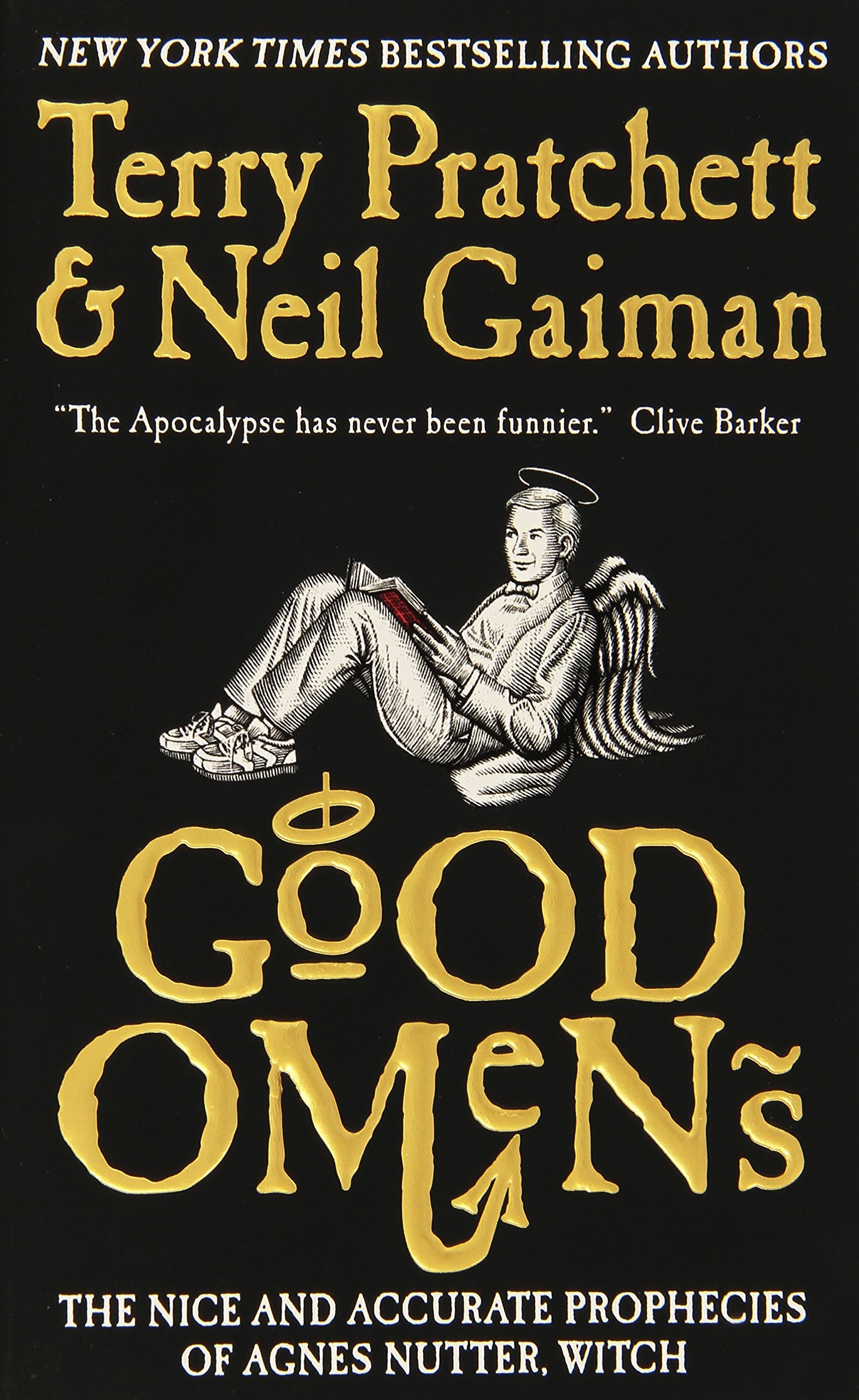
Good Omens by Terry Pratchett & Neil Gaiman (A book set in a different country)

Well, it was set in England.

This was our book club book for this month. I've never read anything by Terry Pratchett, but now I know that needs to change in the future. And same with Neil Gaiman. I LOVED the British humor (humour), and I loved the irreverent tone of the novel.

A fallen angel-turned-demon (the serpent in the Garden of Eden) and an angel (one of the guardians of Eden welding a flaming sword) conspire several thousand years later to botch Armageddon. They rather like Earth and would rather not see it destroyed in a cosmic battle between good and evil. The only problem is, well, they are utterly incompetent. The race to stop the anti-Christ (a precocious blond eleven year old) begins.

I think this book might well have been offensive to me in days gone by, but I was thoroughly able to enjoy it now. I do wonder, however, how the rest of the book club will take it. It's pretty sacrilegious! But funny. Damned funny.


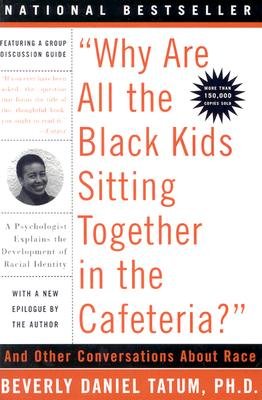
"Why Are All the Black Kids Sitting Together in the Cafeteria?": And Other Conversations About Race by Beverly Daniel Tatum (A book with a color in the title)

I planned to read The Color Purple to satisfy this requirement, but I really wanted to read this and realized with the word "black" in it, it could check off a box too. Win-win. I came across this book in the book store while perusing the African-American Studies section - a tiny, one shelf section of Barnes & Noble, which shares its already incredibly limited space with LGBT Studies. Poor show, Barnes & Noble, poor show. On both counts.

The title grabbed my attention. It's a question I as a white person have always wondered.  It sure did seem like the black kids were always sitting together in high school (not that our school had any black kids, but I noticed it at Forensics tournaments around the state). Isn't that just proof that black people are as racist as white people? I wondered, in my teenage naivete.

Even as an adult, though, I've wondered if we're all trying so hard to be inclusive, why do we still segregate socially? So the book was added to my armload of purchases, and I started it as soon as I got home.

This book is a must-read for anyone who is aiming to become more racially conscious. Though some of it was stuff I already knew - sort of - most of it was extremely eye-opening for me. I knew I receive the benefits of white privilege whether I mean to or not, but I didn't realize to what extent until reading this book. I also knew that institutional racism is a serious issue, but this book highlighted to me how deeply it runs in American society. I knew that other races experience racism, not just African-Americans (and Latinos), but I never realized to what extent and how easily overlooked racism against other groups is, such as Asians and Native Americans.

Talking about race as a white person is hard, because we aren't used to doing it. We may not be actively "racist" but how often do we keep silent out of fear of saying the wrong thing or upsetting certain people? Keeping quiet about an issue that is literally costing black lives is contributing to the problem. I'm still no expert on what I can do as a white person to combat institutional racism, but this book has made a lot of things more clear to me and has given me a deeper understanding of how deeply ingrained racism is in our society. There is no quick fix for the problem, but this book answers a lot of questions, describes the process of developing one's identity (for all people but particularly people of color), and presents suggestions for how we can all be the change we want to see in the world. For me personally, it inspired new ways to discuss racism with my children. It's not enough to teach them to be "color blind" (an impossibility and a logical fallacy); we have teach our kids to be activists, to teach them what racism does to people and to show them real-life examples of racism destroying lives (Tamir Rice, Trayvon Martin, the list goes on far, far too long), so they will grow up to be a generation that actively pushes racism another few steps back towards the history books and away from the day-to-day experience of far too many of our fellow human beings.

This book has also inspired me to read more black authors and introduce more black historical figures to my kids (and myself) besides just the famous ones they'll learn about in school. Those figures are important, certainly, but until now, I've never noticed how whitewashed history is.  We know of only a handful of black historical figures, and the rest are white. This does a huge disservice to us all. It's my mission now to seek out the less well known non-white authors, activists, and historical figures to better educate myself and my kids. (Any suggestions would be welcome!)


To see what else I have read this year:
September
July/August
June
May
April
March
February
January

Sunday, September 06, 2015

Challenge Accepted! July and August Books

The end of the year is coming around fast, and I haven't gotten as far along in the reading challenge as I hoped I'd be by this time. But I'm doing not bad either.

July and August were such busy months with me starting my new job and us moving, so I never got a chance to review my July books. Even now, I'm not sure how much of a proper review I'll be able to write, given the distance in time since I read some of them and the lack of time I have right now to write with.  We are trying to get as many boxes unpacked and put away as possible with this long Labor Day weekend. Three days off work means three days of getting the house closer to the way we want it.

So anyway, let's get on with it, shall we?

July Books

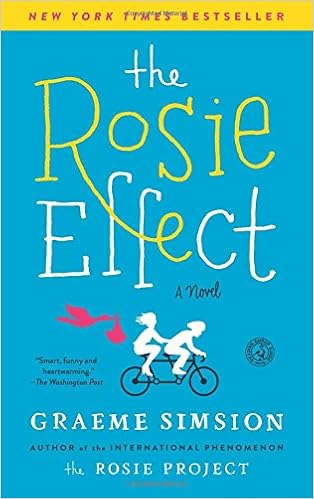
The Rosie Effect by Graeme Simsion (A funny book)
Last year in our book club we read The Rosie Project, and I loved it. It was just a fun, quirky story with delightful characters. The Rosie Effect is the sequel which came out earlier this year (or late last year, can't remember).  It's about Don Tillman, a genetics professor with undiagnosed Aspergers, who falls in love with a very unpredictable and fiercely independent woman called Rosie. This book picks up where the last left off, and it did not disappoint.  It was filled with much of the same awkward, cringeworthy situations, good-natured humor, tear-jerk moments, and heart-warming sentiment that I loved about the first book. I hope there will be a Rosie Book 3. I will definitely read it!

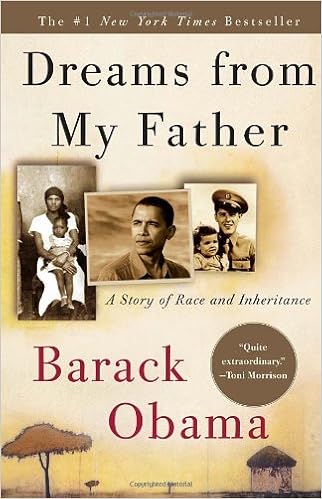
Dreams from My Father by Barack Obama (A non-fiction book)
I loved this book. Loved it.

I read about half of The Audacity of Hope and expected this to be much of the same, but it was entirely different. Dreams from My Father is an autobiography, plain and simple. Well, not plain and simple; it's so much more than an autobiography. It's an important commentary about race in America.

Obama starts his book with his youngest memories of childhood, a black boy living with his white mother and white grandparents who grew up listening to stories about his Kenyan father whom he didn't actually meet until he was ten years old.  He takes us through his formative years - a couple of elementary school years in Indonesia, middle and high school in Hawaii, college in California, working in New York and Chicago, and finally his first visit to Kenya.  All through the book he illustrates his struggle as a black man from a white family trying to figure out just who he is and what he was meant for.

While I did get bogged down a bit during the long section about his job as an organizer in Chicago, the whole book felt important, like something that no one is talking about but should. Or perhaps something people are talking about but in the wrong way. I had to take the book very slowly because every chapter left me with something bigger than myself to dwell on and work through. So much that I'm going to have to go back and read it again sometime soon. I don't feel like I can even adequately review the book, because my experience as a white person is so limited and so privileged. All I can say is, whether you like Obama the politician or not is not the issue with this book. This book is entirely unpolitical. It's about a man and his struggle to come into his own and to find himself in a world he never seemed to fit into. It's well-written, thoughtful and careful, and emotionally stirring.

(A side note: What I would've given to see the look on his Kenyan family's faces when their own Barry was announced President of the United States! I imagine them saying, "He's an Obama! He was made for big things!")


August Books

Incognegro by Mat Johnson (A graphic novel)
Like so many books these days, I learned of this one via NPR.  Mat Johnson was being interviewed by Terry Gross on his latest novel, Loving Day, and they referred often to his first graphic novel, Incognegro. I decided that would be my graphic novel.

Only problem was, it's out of print, and all the copies I could find online were running $50-60 bucks. Erm...

But I kept looking and finally found it for $20, and I snatched it right up.

It's the story of a black journalist with such fair skin that he goes undercover as a white man to investigate lynchings. He is tired of the job though and decides it's time to move on - until his boss gives him one last assignment...

I had no idea that a graphic novel could pack such a punch.  The artwork was horrifying, and the story was agonizing. I actually felt sick to my stomach at parts, the reality of recent history making itself plain to me in the gory images of lynchings and the unthinkable things whites did to blacks - and not all that long ago.

This isn't an easy book to get a hold of, but it was really incredible. It's also opened up the world of graphic novels to me. While I doubt I'll be delving straight into Batman any time soon, I have started reading my second graphic novel - to be discussed in September's books!


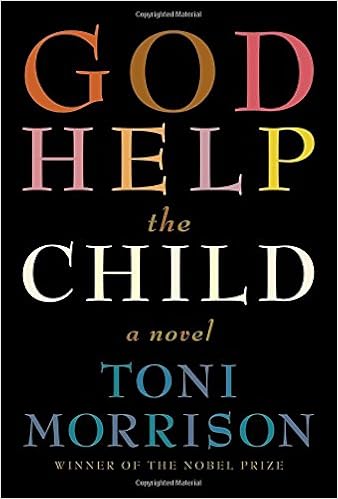
God Help the Child by Toni Morrison (A book from an author you love that you haven't read yet)
After reading Disgruntled and Dreams from My Father, I started looking for more books written by black authors about black lives.  Toni Morrison's Beloved is one of my favorite books, so when I heard her interviewed (on NPR of course) about her new novel (she's in her eighties!), I got very excited.  Morrison usually writes about the past, and I believe this is her first novel set in the present. It was a little bizarre; it had all the most modern cultural references, but she still wove in the mystical as if it were the practical in the way she so seamlessly does.  

This book is about Bride, a very dark girl ("Sudanese black") born to a fair skinned mother, Sweetness, who couldn't properly love her for her skin tone.  Bride grows up to be a very successful young woman, but the scars of her loveless childhood never really heal. As she tries to assert herself and leave the past behind, she only becomes more and more the child she is fighting to no longer be.  In the meantime, Sweetness watches her daughter keep her cold distance, and it slowly, vaguely occurs to her that "what you do to children matters. And they might never forget."


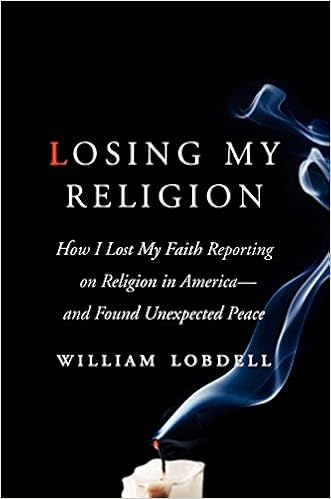
Losing My Religion: How I Lost My Faith Reporting on Religion in America and Found Unexpected Peace by William Lobdell (A book with antonyms in the title)
I actually found this book by Googling "books with antonyms in the title". Having just written and published my own deconversion story, I figured it was now safe to read others. I'd kept very clear of any books like this while writing my own for fear of being influenced by them.  I wanted my book to be pure and honest and entirely my own; I didn't want their words and emotions to seep into mine.

It's a good thing I made that my plan, because I found myself nodding and murmuring "uh-huh" and "mm-hmm" the whole way through.  The specifics were different - he became a believer as an adult and was drawn to the Catholic church, and his faith fell apart after years of reporting on corruption in organized religion - but our hearts seemed to have been in the same place and dealing with the same things.

I wrote my book to make others in the same situation feel less alone. Reading this book returned the favor.  I felt after reading it that I was comforted this time around. It was a pretty good feeling.


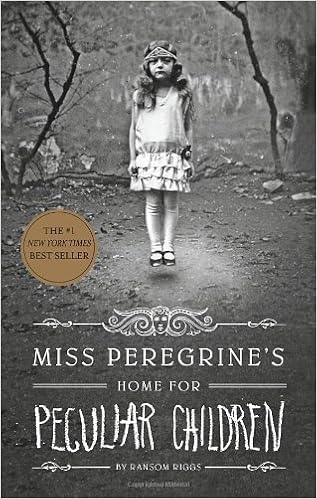
Miss Peregrine's Home for Peculiar Children by Ransom Riggs (A mystery or thriller)
Mysteries and thrillers are not my genre. I don't like being scared, and I don't like suspense.  So Miss Peregrine's is simply going to have to be the book that checks this category off. It's mystery enough to count, I think.

Jacob travels to the island of his beloved grandfather's childhood to unlock the secrets of his grandfather Abe's dying words to him. He has long stopped believing his grandfather's wild and impossible stories, but what he finds on the island changes his life forever.

The book combines authentic vintage photography with a plot line that is interesting, mysterious, and engaging. The unique photography adds enormously to the story line. I picked this up on a whim in the book store, and I really liked it. It's got a few choice words, so it won't be eight-year-old Fifi-worthy just yet, but in a few years, I hope she pulls it from the shelf and loves it. It's a book I look forward to sharing with my wee readers.


To see what else I have read this year:
June
May
April
March
February
January

Thursday, April 30, 2015

Challenge Accepted! April Books

If I was a little let down by only reading four books in March, I'm feeling really let down by my April accomplishments. Only three.

HOWEVER. One of those books was pretty long and dense, so that has to be factored in.

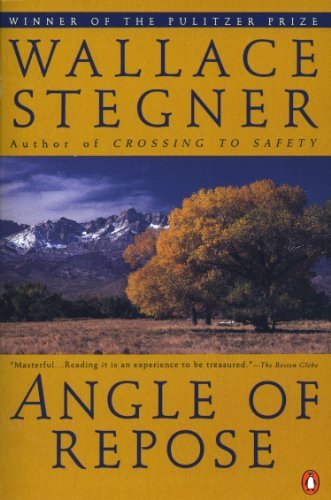
Angle of Repose by Wallace Stegner (A book that made you cry)
I recently wrote about this book's personal effect on me, but for the purposes of this post, I'll just give a quick synopsis. 

Historian Lyman Ward, who suffers from a debilitating skeletal disease, embarks upon a project of writing the life story of his grandparents, Susan Burling Ward and Oliver Ward, gathering the majority of his information from the extensive correspondence between Susan and her life long friend Augusta.  Susan, an Eastern genteel, and Oliver, an aspiring engineer with no college degree, marry after a long and unconvincing "courtship" that existed almost entirely in letters, and she joins him in their first homestead in the West in the late 1800s. As far as Susan sees it, this is a temporary settlement while he gets the experience he needs to return to New York and become an engineer in the East.  He, however, thought she understood that an engineer's life was in the West and always would be.  And thus begins a life of disappointments, successes, stalled work, poverty, hope, love, regret, friendships, loneliness, disaster, and exile.  Amidst the stories of Susan and Oliver's erratic and restless lives, Lyman must also wrestle with the reality of his own life - a failed marriage, a failing body, a meddlesome son, a ridiculous secretary, and a faithful but aging friend/nurse.  He is living alone in the very house his grandparents lived in for the last half of their lives, among the same roses his grandfather cultivated, the same roses whose scents hung in the air as heavy as the memories they carried.

This, in my opinion, is an absolutely fantastic book, one of the best I've ever read.  It is dense and rich, and so very cognizant of the human condition.  Stegner goes right down into the thick of what it is to be married and the cracks and craigs that can develop so very easily.  Even though the majority of the book is based over a century ago, Stegner also manages to draw the reader right into the Victorian era, forgetting our modern philosophies and beliefs about equality and the Women's Lib, and relive life the way it was then with no distaste for their archaic values.  In fact, we become almost nostalgic for it.  

I have read this book three times now, and every single time it has reduced me to tears.  And not just stingy-eye-tears, but full-on sobs, fat plops smearing the ink of the pages, bright red puffy eyes, dripping nose, the works.  I re-read it this time because our book club chose it as our next book. (We all submitted titles and chose one at random. Can you guess who submitted this one?!)  I truly hope the rest of Book Club will love it as much as I do, and I eagerly await our discussion!

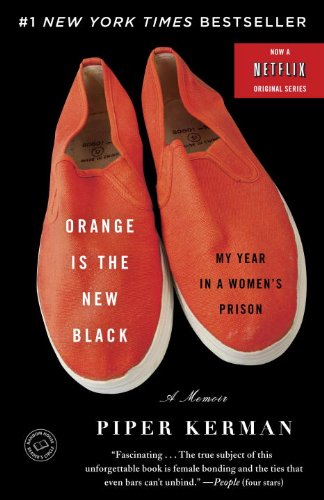
Orange Is the New Black by Piper Kerman (A book based on or turned into a TV show)
If you haven't already watched Seasons 1 and 2 on Netflix, perhaps consider reading the book first. I wish I had.

The book is a memoir, the true story of Piper Kerman's year in a women's prison. It is heartfelt and compassionate and nothing at all like the TV series.  It is not over dramatic, we do not witness any fights or lesbian sex scenes, and the Piper "character" is not as troubled as they portray her on the show. Also - SPOILER ALERT -Larry is faithful.The book re-humanizes the women behind bars that we so often dehumanize because of their crimes.  It reminds us that punishment without rehabilitation is only cruelty.  It highlights the serious ineptitude of America's prison systems, as well as the disservice it does to society, when it perpetuates the cycle of violence and incarceration.  Until America realizes that pure punishment alone does not solve the problem, we will always have people cycling in and out of prison, unable to cope with life "on the outs".  Prisons must do a better job of rehabilitation if we want to see these people living productive and non-criminal lives. (And it should never have become a profitable "business".)

The TV show is great entertainment, but other than some of the characters and scenarios, it is not the same as the book.  Which is better? It depends on what you call "better".  If you ask me, the Netflix Original Series is more exciting, but the book touches your heart and engages your empathy.


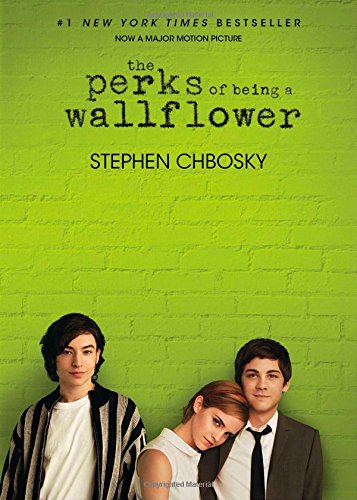
The Perks of Being a Wallflower by Stephen Chbosky (A banned book)
Again, another book with a movie-based-on-a-book.  I saw the movie first and read the book second. I gotta stop doing that.

I chose this as my "banned book". I chose it over several other more classical and well-known banned books, because I love the movie so much.  I figured I knew why the book would be banned in many high schools across the state - it deals with drugs and sexuality - but I wanted to know just how "bad" those concepts are in the book.

Spoiler - not bad at all. Aside - don't ban books because they deal with actual human dilemmas, particularly teen ones.

Charlie, a lonely high school freshman, whose close friend shot himself the year before, meets two seniors, Sam and Patrick, who take him in and show him genuine friendship, in spite of his quirks (and tendency to cry a lot).   It quietly and honestly tells Charlie's story through letters he writes to a "friend".  (Charlie needs an anonymous and understanding person to talk to. We know nothing about this friend, and this friend actually does not know Charlie.)  He talks about his first time getting high, his first kiss, his first girlfriend, his love of books and desire to become a writer, and true love and friendship.  The book is warm, but has an undercurrent of something unsettling. We get the sense of foreboding but cannot be sure why.

I liked this book, but again, it's a little different from the movie.  Obviously.  Movies must dramatize everything to keep the viewer constantly holding his breath.  The book does not feel the need to do so. It plays everything down, with Charlie telling anecdotes to his "friend" with a mixture of youthful naivety and insight beyond his years.  It made me glad I'm not sixteen anymore. It made me frown and sigh at the thought of anyone ever having to be sixteen.

It should not be a banned book. (Should any book?)  Kids need to be able to read this stuff. Kids, more than anyone, need to know they are not alone in their struggles.  This will be required reading for my little ones when they start to become a lot less little.


To see what else I have read this year:
March
February
January

Sunday, March 29, 2015

Pride and Prejudice

I'm not a prejudiced person. I'm not racist or homophobic or sexist or a bigot.


Am I?

It's easy to test, right? Take homophobia, for starters. I am completely comfortable and at ease around gay people. I can make jokes without worrying I'm coming across as offensive. I don't wince when I see a man kiss a man or a woman kiss a woman. I support marriage equality. I totally get it; love is love and it doesn't bother me who loves whom. I can be totally myself around LGBT folks without feeling I have anything to prove - eg prove I'm not homophobic. Except... when I meet someone who is gay (either openly, obviously or assumedly), I immediately want them to know "we're cool". I immediately have the desire befriend them. Without even knowing them (knowing if they are nice or mean, boring or interesting, someone I'd have anything in common with or not), I want to like them, because, you know, "we're cool".

I have to wonder - is that just prejudice in reverse? Am I overcompensating somehow?

Or take sexism. Anti-feminist comments, sexist remarks and patriarchal attitudes infuriate me. I am completely against gender stereotypes and the boys-will-be-boys mentality or the pretty-in-pink girly girl thing. I believe women are just as capable as men, and men are just as capable as women. Yet when I first heard about the documentary Women Aren't Funny, my very first thought was they aren't. Replaced immediately by self slap on the hand and a recognition that that's exactly the problem; even we women are accepting the anti-female attitudes and lies. Or the first time I met a stay-at-home-dad, I had to correct my knee-jerk mental reaction dead beat.

Does having that instant reaction to women (or men) mean I'm actually a total sexist?

Take racism. I'm not racist. People are people, skin color is decoration. But I live in the whitest of white towns, and I am white. I acknowledge - with embarrassment - that I've got white privilege just dripping all over me. My parents and grandparents, while not wealthy, have also had white privilege serve them well, so somewhere down the line, my parents, easily obtaining jobs and living in nice, fairly safe towns, never being sent to inferior schools and forced to drink out of special water fountains, were fortunate enough to send me to private school for several years, pay for school trips to Boston and mission trips all over the world, and later pay for the college tuition left over after my scholarships, which has left me a well educated and well traveled young woman. Since then I've easily obtained many jobs, I've been pulled over a couple of times by police officers but sent on my way with just a warning, I've never been viewed suspiciously by strangers because of my hair or skin, and even when I totally look like I'm shoplifting by putting my hands in my coat pockets, I've never been questioned. In fact, my whiteness has been so advantageous that I actually don't even have a clue what setbacks black people or other minorities experience day to day in areas I take totally for granted.

When I start to dwell on just how lucky it is to be white in the United States, I feel guilty. Isn't "white guilt" just another branch of racism?

Or when I walk out of a store late at night in one of the surrounding non-white towns, and I see a group of black guys hanging around the parking lot looking at me and I feel an instant pang of worry followed by an instant rebuke of "wow, that was racist of me". Does this prove I am actually racist? Maybe, but I hope not. I mean, I immediately realize that any group of guys staring at me while I'm alone and vulnerable will make me feel nervous (because while I might be white, I am also female), but maybe I'd be less worried if they were white guys instead...

Isn't that racist too?

So, I often ask myself, am I a prejudiced person after all?

Do our first gut reactions of discomfort or disdain of the unfamiliar make us bigots? Or is it the following moments of realization and restructure that count for more and better define how tolerant we actually are?

A picture recently went viral of a woman in a bikini that had everyone cheering this mom on for being confident enough to show her imperfect belly on the internet. I was annoyed by the sexism implied - yay, a woman is showing her body and it's kind of flabby, good on her! - as if perfect bodies are the norm and she was a trailblazer for being imperfect. The question was asked, do people judge women for their bodies or do women just perceive they are being judged? (The answer is both.) My friend admitted that her first instinct often IS to judge, followed immediately by a self-check of non-judgment. I didn't think she was being anti-feminist by this admission; she was being honest. Human. Is it simply human to not understand what is not known? Is it going beyond human instinct to recognize we are uncomfortable by what is not known and to correct those feelings when we discover them?

I used to be uncomfortable with gay people. I couldn't get out of my head the idea of "ew, boys and boys in bed together". It was as if I assumed the whole point of their existence was to be gay. It wasn't until I realized my faulty thinking and began checking my discomfort over and over that I was finally able to see gay people as just people, like me. Who really are more than their sexual orientation.

I used to be very un-feminist. I believed women weren't funny or good musicians, and that they were unfit for leadership (because they were too emotional) and were designed to be helpmates for men. It wasn't until I recognized this faulty thinking and began to check myself over and over that I began to shed this socially ingrained attitude towards gender that I became comfortable with gender equality (and gender identity, which is something I am still in the process of checking myself on). I realized men and women, girls and boys, cisgender or trans, are just people, like me. Who are actually more than their gender.

I used to be uncomfortable around black people. When I left high school, I went to university and joined a gospel choir. I had never, in my white high school life, been in the minority until I joined that choir, where there were forty or fifty black students to seven of us whites. It was there that I realized how uncomfortable I was around black people (and how embarrassed I was for having come from such a segregated town). I realized that while I knew us all to be the same, I felt consciously different, separated by culture. I began to check myself and acknowledge when I felt "other". Since then I've come to recognize that racism in the US hasn't expired, and that it happens in ways I don't even notice. Like with sexism, some things are so socially ingrained, I don't always notice their effects or influence, but when I do notice, I check myself, restructure my thinking, because people of all colors are really just people, like me. Who are much more than their skin color.

So the question I wrestle with is: Are we all actually to greater or lesser degrees prejudiced people? Aren't we all, by default, bigots? Until we recognize the biases we have inside our own minds and hearts, we cannot help looking at the "other" as something to distrust. It's probably evolutionary, but we've long since out-grown the need for it and now it's just a roadblock, cordoning off the road to progress.

I'd like to believe that the more we each individually open our own eyes to our own prejudices, peel away the deep layers of fear and distrust, and teach the next generation how to do the same, our society will grow into a much more inclusive one, where "otherness" is something we love and enjoy and use to our advantage rather than quake and fight over.

I think it's okay to say I'm not a prejudiced person, because in my heart I don't want to be.


P.S. To follow up with a little bit of light-heartedness...

Sunday, January 04, 2015

You Can't Handle the Truth!

In the early months of 2014, I started writing in a secret blog to get some thoughts and feelings out of me that I wasn't yet able to say publicly.  At the time, I still felt very scared to "come out" as atheist. Since doing so, I've found people to be a lot more tolerant and accepting than I expected; that is, people who already know me to some extent and who read my blog.  As for how others would react, I'm not really sure; I don't generally share this information with people I barely know or have just met for fear of rejection, pity or getting mission-friendshipped. There have been many situations in which I've had a sudden, inexplicable urge to announce that I'm an atheist, but I don't.  Usually because it would be completely inappropriate (such as times when I'm surrounded by people talking about God's will and love and grace and whatever else, assuming that naturally everyone around them is in complete agreement) but also because I realize doing so would turn me into the opposition, the other, the opposite. While I don't see the Bible Belt as frightening a place to be an atheist anymore, and while I'm not as worried about how people will think of me, there is still a lot of truth in the words I wrote nine months ago.

<<<<>>>

April 10, 2014 

Being anything other than Christian in the Bible Belt is a little like trying to walk a tight rope suspended above an enclosure of, say, hungry tigers. Admittedly it depends on where in the Bible Belt you are - some cities are more tolerant than others - but where we are, it's pretty "ropey" to be non-religious, and even worse if you are a confirmed "atheist". Though it's never happened to anyone I personally know (unless you count internet friends, in which case, it's happened to several people I know), I've heard horror stories of people losing their jobs over their (lack of) faith and being ostracized by their families and communities. Keeping our opinions to ourselves, in not only religion but also politics, has become our modus operandi. My husband doesn't talk about religion or politics at work, and I don't talk about them with other mothers at soccer practice or play groups. It's a little isolating, but it's what we do to survive. I imagine the small population of people with religious beliefs aside from Christianity or political affiliations aside from Republican feel the same way. (I remember me and my entire class shunning a girl on the playground in elementary school because her family was voting for Michael Dukakis instead of George Bush back in the 1988 presidential election.)

It's not that I'm ashamed of my new-found unbelief. It's more that to be an unbeliever is akin to being unvaccinated. It's as if people have this fear that if they come in close contact with an unbeliever, some of their unbelievingness might infect them, or at least infect the more vulnerable members of society. If an unbelieving child plays with their believing children, they might pass on some kind of doubt-bacteria which could start an epidemic. Christianity has practically eradicated atheism and agnosticism in the South; no one wants those few unenlightened families to interfere with the herd. Generally speaking, folks tend to have two reactions to someone who doesn't agree with their religious beliefs - proselytize or ostracize. (There are of course those wonderful people who choose to live and let live, for whom I am incredibly grateful.)

I'm not a rock, I'm not an island, so I do worry about being alienated. I grew up in this town, even though I lived elsewhere for fourteen years. I returned to this area a very different person than the young girl who left it. When I run into people who knew that girl, it's uncomfortable to reveal the woman I have become. So, it's not surprising what I said a few days ago to the dentist.

In all my thirty-plus years, I've never had a cavity. Until this year. So last week I went to my dentist's office for my first filling ever. I've known my dentists for most of my life. They are father and brother to the kid who was my best friend for many years. When we returned to the area, we chose their practice, because they are fantastic at what they do, and I know and trust them. While I reclined in the chair, waiting for the anesthetic to kick in, the senior dentist, my friend's father, came in to say hello, catch up a little on the fourteen years we've been away.

He asked about my parents, asked about my brothers.  I asked about his wife, his son. I asked if he was still at our old church.  He asked me where we are going to church.

I guess I sort of asked for that.

And at the moment of truth, I wimped out.  "We're going to the Lutheran church," I answered.

I was surprised by my response. It wasn't a complete fabrication; it is the church we were visiting as a last ditch effort to recover some sort of mustard seed of faith before realizing we just flat out did not buy into it anymore.  But it's not the church we attend. We don't attend anywhere.

The answer satisfied him, and we moved on.  But I kept thinking about what I'd said, about  how hard it is to admit being atheist now.  I could imagine the look on his face if I'd told the truth.  Which would it be, a millisecond of sadness, disappointment or disapproval before reverting to medical professionalism? Would the conversation have become stilted, uncomfortable?

Maybe, just maybe, it would have been fine, but I know this place and its people, and I can say pretty confidently that there would have been at least a little sadness in his eyes. It's hard for a Christian to see one of its sheep wandering, ignoring the shepherd's voice, leaving the flock.  It's not only hard because they worry about that sheep's eternal soul, but it conflicts with their understanding of the shepherd.  Why wouldn't the shepherd leave the flock in search of the lost sheep?  It must be a problem with the sheep, not the shepherd.  It's never a problem with the shepherd.

At the end of the day, my response was probably the most prudent one I could have given.  I hate being dishonest with others, untrue to myself, but I'll put both my hands up in the air and admit that on most days it's better than being pitied or rejected.