Showing posts with label 2015 Reading Challenge. Show all posts

Thursday, January 07, 2016

Challenge Accepted! December Books

Sad confession time.  I only got through 1.5 books in December.

And the only reason I have taken so long to blog about them is because I really wanted to at least finish the second book so I could write about two, not just one.

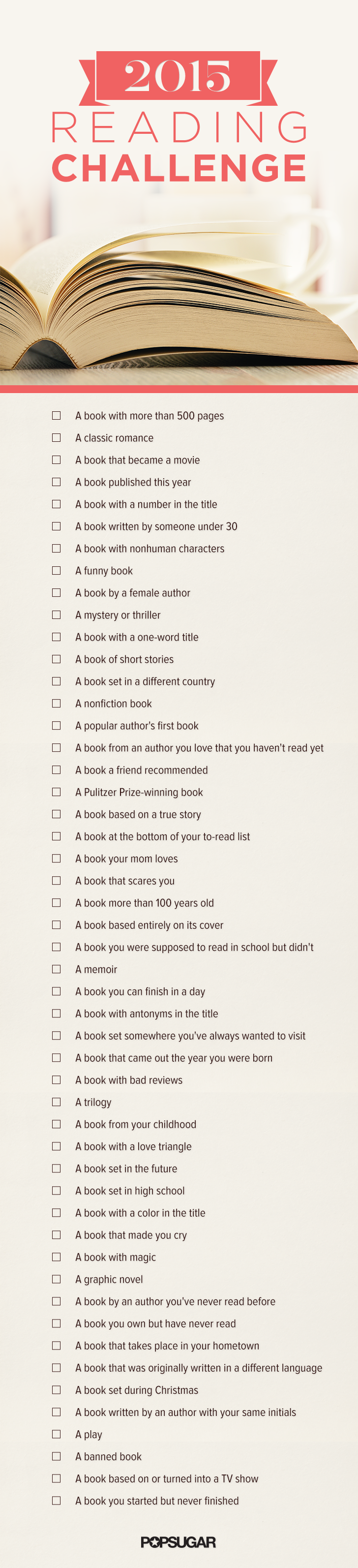
December is a busy, crazy month, so I'm don't feel too bad about failing the 2015 Reading Challenge. I only missed it by three books. I consider that pretty good!


A Christmas Carol by Charles Dickens (A book set during Christmas)

Another sad confession. I've never read A Christmas Carol - until now, of course.  I have, however, seen A Muppet's Christmas Carol, and like most people, I knew the story.

What can I say? It's a Christmas classic. I spent the whole time reading seeing Michael Cain, Kermit, Miss Piggy, and Gonzo.  I could not even remotely imagine Bob Cratchit as a human or the Ghost of Christmas Present anything other than a giant puppet. And there was only one Marley... Even so, kudos to the Muppets for following the book almost word-for-word.

I'm not sure if this is a commentary on the book or the movie.


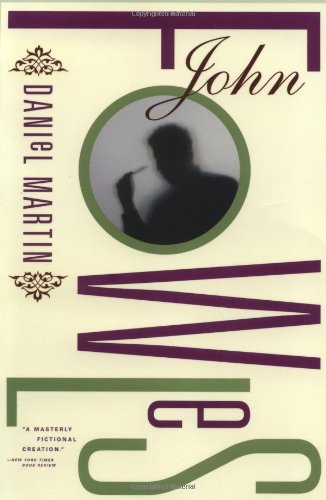
Daniel Martin by John Fowles (A book with more than 500 pages)

Ahhh. Now this is the book I wanted to talk about.

"A masterpiece of symbolically charged realism....Fowles is the only writer in English who has the power, range, knowledge, and wisdom of a Tolstoy or James." (John Gardner, Saturday Review)

First, a little background. I love background.

I took a modern fiction course in college with Ellen Gilchrist. In that class, Prof. Gilchrist introduced us to a wide array of fantastic novels I'd never heard of. Even the ones I didn't love still made a lasting impact on me. In that one class, she introduced me to three books I'll never forget, two of which have become lifetime favorites, and one of which literally changed the way I looked at literature forever.

That last one was 100 Years of Solitude by Gabriel Garcia Marquez. But Daniel Martin is one of the two that has become a lifetime favorite.

I chose this book as my "book with more than 500 pages", knowing that choosing it would mean not completing my challenge. I was okay with that. This book is no quick and easy read. The plot develops slowly yet steadily, like life. No details are omitted. Deep introspection of the narrator and thorough psychoanalysis of the supporting characters accompanies every small moment. Reading this book is like reading God's diary. How do I even begin to describe this novel?

It is the most intelligent, intellectual, insightful, raw, honest, and challenging book I can think of. 

To give the plot line almost does the book a disservice, because it is so much more than just a story. Daniel Martin is a middle-aged British screenwriter, living in California, coming to terms with his past, present, and future, all of which seem in some way to take the form of the females in his life: his grown daughter, his ex-wife, his young girlfriend, his ex-sister-in-law. The past he has spent his entire present trying to put behind him finally pulls him back when his estranged ex-brother-in-law/best friend requests to see him one last time before he dies of cancer. Daniel must return to England and face all that he has successfully ignored for far too long.

Daniel Martin is a story. It is also politics. It is religion. It is psychology, sociology, anthropology. Throw in the discreet and moving sex scenes, and it's biology. This is my third time to read it, and like the two times before it, I have learned in it new things about humanity and about myself. It took all of December and a week of January to finish, and that's with steady reading. It is so dense, so rich, it can't be taken in all at once.It has to be read in chunks, chewed on, mulled over, considered.

However, if you have the patience and want to read a really great book, I highly recommend it.


Oh, one more thing. You know that song "Nightswimming" by R.E.M.? I like to think Michael Stipe got the idea from this book. It was listening to that song that made me decide Daniel Martin would be my 500 page book. (More like 640.)


So what did I not manage to read in 2015?

Three books:
A classic romance (Wuthering Heights by Emily Bronte)
A book your mom loves (The Girl With the Dragon Tattoo by Stieg Larsson)
A book that came out the year you were born (The Color Purple by Alice Walker)

All of which remain on my To-Read List for 2016.


To see what else I have read this year:
November
October
September
July/August
June
May
April
March
February
January

Monday, November 30, 2015

Challenge Accepted! November Books

I'm almost to the finish line! Five books covered in November; five to go by the end of the year. Can I complete the challenge?!


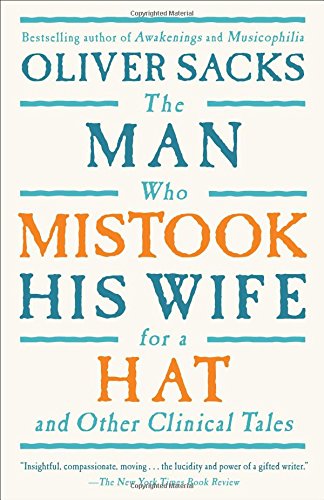
The Man Who Mistook His Wife For a Hat by Oliver Sacks (A book you started but never finished)

In college, I had to satisfy a social science credit by taking either sociology or psychology. Thinking Psych 101 would be interesting (lol, psyche!!!), I registered for 8am MWF Intro to Psychology. My professor was a perception specialist and spent the first three weeks or so talking about nothing but perception. I don't know what he talked about after that because I dropped the class and took sociology instead.

One thing I took away from that experience, aside from never ordering textbooks on eBay in case they don't arrive in time for the first test and you'll have to drop the course to avoid failing, was an interest in this book.  Professor Don't-Remember-His-Name recommended we all ready The Man Who Mistook His Wife For a Hat. I ordered the book for my father-in-law several years later, the recommendation to read still lingering in my mind, and read half of it. I don't recall finishing it.

So I ordered another copy last month and read it again, start to finish. It's a fascinating read, balancing out scientific and clinical commentary with unbelievable anecdotes, making it readable for even the least psychologically trained of us. If you're interested in truly bizarre psychological phenomena, you should get a lend of this book. It's much more exciting than Intro to Psyche.


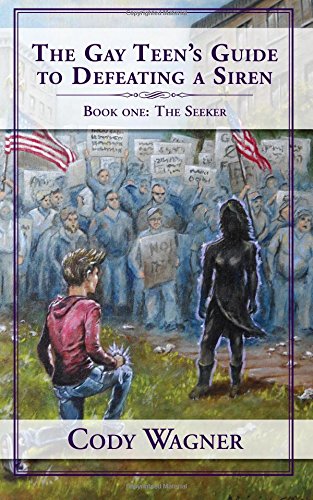
The Gay Teen's Guide to Defeating a Siren: Book 1: The Seeker by Cody Wagner (A book set in high school)

Since the Self-Published Book Fair, I've gone on a big "buy self-published books!" kick. This book was written and self-published by a friend of a friend. I had no idea if it would be any good, but being a self-published author myself, I wanted to support the guy. Plus, I love the gays. I ordered the book on Amazon and read it in two days.

I loved it!

It's a humorous sci-fi-ish/fantasy-ish/not-realistic-ish book about a gay kid who accidentally comes out of the closet and gets sent to a "pray away the gay" camp. Little does he know the danger that awaits him there. The good thing is he has a superpower. He's gay.

Y'all, I freaking loved this book. I won't tell you anymore, lest I give too much away. I just have to say, go support a self-published author and order this book. It's not in any way offensive to religion (he manages to keep religion pretty well out of the book other than the fundamentalist preacher who insists his parents send him away to camp for healing), and it's not a "gay" book. It's just really fun. I can't wait for Book 2!


10% Happier: How I Tamed the Voice in My Head, Reduced Stress Without Losing My Edge, and Found Self-Help That Actually Works--A True Story by Dan Harris (A book with a number in the title)

My friend (I think I can call her a friend - she's a woman I know professionally, with whom my company does business, and with whom I've really hit it off, so I think I can call her a friend... It's not like I'm not an over-analyzer or anything...) recommended this book to me. We actually recommend lots of books and movies to one another. She had just finished this one a few weeks ago when we met for lunch (a half business, half pleasure lunch - I think I speak for us both when I say it was half pleasure) and thought I'd really like it.

It's about Buddhist meditation.

And she was right. I ordered the book that evening, and once I started it, I finished it quickly. Dan Harris (of ABC's Nightline and Good Morning America fame) was once a hot-headed, drug-addicted asshole (his words, not mine) of a news reporter. He was given the religion beat by Peter Jennings, which he reluctantly accepted, being a life long agnostic and wholly uninterested in religion. It was on this beat that he discovered meditation first through self-help books and later by Buddhist practitioners. The book tells the story of how he became interested in meditation in spite of himself (and in spite of the raised eyebrows and dismissive comments of his colleagues and family) and eventually came to be a committed (secular) Buddhist yogi.

I have to admit, I was pretty taken in by his arguments. I always believed meditation and "clearing your mind" would be an open door invitation for the demons to step inside and start rearranging the furniture. With the fear of little evil imps no longer haunting my nightmares (and boy did they haunt my nightmares), the concept of mindfulness really struck a chord with me.

When I mentioned to Scott that I was reading a book about Buddhism and meditation, I expected an eye roll, but to my surprise, Scott was very supportive of the idea. He even said he thinks it would be great for me.

I'm thinking about it.


Coming Clean by Seth Haines (A book that scares you)

I wrote an extensive "review" of sorts of this book earlier this month. Click here to read.

The short version: I liked it a lot, even though I don't believe in a god. It is beautifully written, the imagery is sharp and emotive, the story line is at times heartbreaking, and the general experience of suffering is universal.


A Streetcar Named Desire by Tennessee Williams (A Pulitzer Prize-winning book)

I saw the movie as a Marlon Brando-obsessed teen (swoon), but I'd never read the book - or play, actually - though I've always wanted to. The play won the Pulitzer in 1948, thus checking off a bucket list item and a book challenge category.

As an adult, I definitely saw the play as much more convoluted than I did as a teen. As a teen I:
A) Couldn't understand why Stella stuck with Stanley
B) Hated Stanley (even if he was played by the sexy Brando)
C) Thought Blanche was batshit crazy.

Reading it now, all the nuance revealed itself me. All the complexity of characters - the good/bad/ugly of each. While on the surface, A, B, and C still basically held true, I saw the subdivisions to all. I sympathized with all three main characters, seeing their flaws but also seeing how and why they acted the way they did. I'd love to see this performed on stage some day. I'd also love to watch the movie again. (Mostly for Brando's bare chest but also for the story.)


To see what else I have read this year:
October
September
July/August
June
May
April
March
February
January

Sunday, November 22, 2015

Coming Clean: An Unconventional Book Review of a Christian Book By a Non-Christian Reader

Dear Readers,

This is a little early. Normally I save my book reviews for the Reading Challenge monthly round-up, but I feel this particular book deserves its own post. Excerpted from the draft of the upcoming November book reviews, I bring you less of a book review and more of a personal response to Coming Clean.


Coming Clean by Seth Haines (A book that scares you)

Okay. So I'm really having to stretch here. Really. I've struggled with which book to read for this category all year. I don't want to read anything scary. Why would I do that to myself? I haven't enjoyed scaring myself since I was a teenager. I tried to pick up some truly scary books and had to put them down. I'm all for expanding my horizons, but I'm simply not the least bit interested in reading something scary.

So I'm doing a little creative interpretation.

This book wasn't one that scared me, but the thought of reading it did fill me with something close to dread. Maybe it was a little scary in that I wasn't sure I wanted to read it. Yet, I did want to read it, knowing what I know of the background.

I went to college with Seth's wife Amber (also an author). We were in multiple creative writing classes together. I've studied for tests and eaten meals in her house. I've met Seth, even though it was a long time ago. During the time I was in Scotland, I kept up with Amber's blog, so I remember a lot of this happening (from Amber's point of view). Their infant son was failing to thrive, and I wept with them from a million miles away, I prayed for her baby boy who was slipping away. When I heard that Seth had written this memoir - a diary of his first ninety days of sobriety from alcohol - I wanted to read it. I wanted to know his side.

But I also dreaded reading it, and I couldn't figure out why.

I knew I wasn't looking forward to the God slant of it all. Christianese still rubs me the wrong way. But why would that fill me with dread? Was I worried that this book might wrinkle the bedclothes of my finally comfortable atheism? Was I worried that after all this time, God would speak to me? (Too little, too late?) Was I afraid the fear of hell might rise up within me again, threatening me with its red flames and pitchforks, the laughter of Satan as his claws close around my wrists, and the crossed arms of God looking down, head shaking but not moving to rescue me?

As I started reading the book, several realizations took place. The first explanation for my dread came up almost immediately.  It was "too soon". I'm not as far removed from Christianity as I sometimes think I am. Sometimes, it's just too much, too soon, like a horrible break up. You think you're over it until you re-read your old love letters. I'm not far enough away from it yet to give it the disconnected but respectful deference I can give to other religions. If it were a book by a Muslim or a Jew or even a Mormon, I'd be okay. But this was too close to an almost-healed wound that appears scarred over on the surface but is still tender when pressed.

Very early in, I pinpointed another source of my dread. The fear of jealousy. The prickling feeling of "this guy experienced the silence of God, yet by the end of this book, I'm willing to bet God makes himself known to him." Would this book be a re-visitation of the old Why him and not me? Might there be a jealousy lingering deep down that this guy's faith did not get shaken beyond its breaking point? (To it, yes. But not beyond.)

Despite all these reservations I read the entire book and shared a few tears with him as one who's felt similar darkness. I know the silence of God. I know the doubt, the disillusionment, the pain, the need to numb. I've met the same cast of characters - played by different actors but reading from the same script - the "faith-healers" who make promises they can't keep, the churchgoers who place the fault on your faith (or lack thereof), the trite and glib assertions of "sovereignty" and "God's glory" and "never give you more than you can bear". I know the same theologies that grind against simple faith like tectonic plates and the systematic studies that box up life's complexities (sufferings, dichotomies, mysteries) with pretty Scriptural exegesis ribbons.

We are not that different, this Christian writer and this atheist writer. Not that different at all.

I'll admit here that nestled up with the potential jealousy and the dread and the still-tender wounds was a second-guessing, a head cocked to the other side, a furrowed brow. What I really didn't expect to get from this book was a genuine reconsideration of my own experience. Had I given up too soon? Did I commit the ultimate fail - the Give-Up that scores an F and detention in hell, instead of the Keep Going Despite Everything Rational that warrants an A and heavenly applause?

I wondered that with utmost sincerity - and again, dread. I've been through this before. I've gone there. I've questioned all these things to death and back. Is there something to this, after all this time?

I kept reading. I kept wondering. I questioned my (un)faith along with him questioning his (unsure)faith. The story went on, through the first month, second month, third month of his abstinence from alcohol and his doubt and his desperation to hear God and the silence and the anger and the needing to forgive and the "cave" as he called it where all the darkness hides, and I just couldn't help but think:  Why?

If there is a God and he is this God of the Bible, why on earth does he constantly make faith in him so bloody difficult? When Sunday School tells you to "just believe" and you will be saved, and Gospel preachers say, "you only need faith to be saved" and even the theologians insist "it is by grace and nothing of yourselves", then why would God make faith so impossible to achieve? If it's this gift that only God can give, why does he give it so freely to children and then withhold it so tightly from adults?

Why would he make this simple believing such an impossible mountain to climb, one we have to write books about to even remotely comprehend?

What good does it do to make climbing the mountain of faith so utterly difficult that so many of us eventually lose our grip and crash to the rocks below? What is the truth then, that it is by faith we are saved but by surmounting the insurmountable (the silence of God, the problem of pain, the inconsistencies of Scripture) that we finish the race, make the grade? Does that mean we must do more than just believe to be saved, that there is something we must do of ourselves - a desperate striving, perhaps, while a silent God stands back and observes, clipboard and checklist in hand?

I applaud Seth's journey, and I applaud his resolution. I truly mean that. I loved this book; I loved his writing style, his beautiful imagery, his perfect rendering of the ache of the faith crisis. If I'd read this book two or three years ago, would it have changed the direction of my journey? Maybe, maybe not. My dilemma came from the inconsistencies of Scripture, his from the problem of pain. Our dilemmas might not have crossed paths closely enough for his to affect mine. His denoument, though, is beautiful and enlightening, and I am so happy for him that his faith did not ultimately waiver, and that it is getting him through his struggle with alcohol.

I fear that might come across as patronizing, coming from one who decided that faith is an illusion and God a figment of our imagination. How do I explain that my joy for him is not patronizing at all but genuine?

For I believe he is on the right path. I also believe I am on the right path. I believe all of us who are doing our utmost to find truth and goodness and light and love in this brokenest of worlds are on the right path. I'd have dismissed that kind of talk once as highly new-agey and relativistic; I'd have called myself "deceived" with a sunken heart and a sorrowful sigh. I feel almost Buddhist saying it now. Om. 

I truly mean it though. I never rooted for atheism while reading this story. I hoped the truth would set him free. And unexpectedly with each turn of the page, as he baked bread to satisfy the hunger of his readers' doubts, tiny crumbs of respectful deference dropped onto my plate of cynicism towards Christianity. While the loaf in the end was not for me, the crumbs have given me a warm reminder of what it tasted like to live off that bread.

I remember that a person who lives off that bread is not delusional, any more than a person who does not live off it is deceived.

We are all on the same path.  We are all approaching truth, just from different angles. Call it Eastern and new-agey, call it whatever you want, but this is the truth that I found - most surprisingly - in this book.

It is a little scary. Going from an all-or-nothing faith (or unfaith) to something left of center is new to me. It's easy to say "you're wrong and I'm right"; to say "we all have fingers touching on the truth here" is harder and often more easily dismissed by everyone from all sides.

I made a good choice on a book that scared me. It did wrinkle the bedclothes of comfortable atheism, it did briefly rekindle the fear of hellfire, it did spark a moment or two of jealousy, it did reopen the wounds of once perceived silence and abandonment. In the end, however, after tearing through so many layers of doubt and pain and forgiveness and disappointment alongside the author, I kept returning to the conclusion that if God were real - and loving - he wouldn't make it next to impossible to believe in him. He wouldn't make it so difficult that only a select few - the strongest of the strong, the most emotionally intelligent - make it to the end. For people like Seth have emotional intelligence overflowing in buckets, but it's not only people like Seth whose sons fail to thrive or who suffer the silence of God or who question the childhood experiences of faith. Not everyone has the depth of introspection required to dig far enough into their own caves of darkness to find that one tiny seed of doubt and to root it out like a deeply embedded wart. "Childlike faith" shouldn't take a PhD to achieve. Faith shouldn't require books upon books to explain.

However. Just because it is not the path I am on does not mean it is the wrong path. There are many trails to the top of the mountain. To everyone trying to get there, I recommend exploring all of them. Including Seth's.


Love,
an atheist author and reader


P.S. Yes, I capitalize the G in God, just as I do the A in Allah or the Z in Zeus. This is grammatically correct, religiously respectful, and also incurably habitual.


Sunday, November 01, 2015

Challenge Accepted! October Books

*Ahem. First post of NaBloPoMo.*

In order to complete my challenge for 2015, I needed to read 4 books each month October - December. I managed two last month.  Let's see if I can get through ten more books in the next two months!


Good Omens by Terry Pratchett & Neil Gaiman (A book set in a different country)

Well, it was set in England.

This was our book club book for this month. I've never read anything by Terry Pratchett, but now I know that needs to change in the future. And same with Neil Gaiman. I LOVED the British humor (humour), and I loved the irreverent tone of the novel.

A fallen angel-turned-demon (the serpent in the Garden of Eden) and an angel (one of the guardians of Eden welding a flaming sword) conspire several thousand years later to botch Armageddon. They rather like Earth and would rather not see it destroyed in a cosmic battle between good and evil. The only problem is, well, they are utterly incompetent. The race to stop the anti-Christ (a precocious blond eleven year old) begins.

I think this book might well have been offensive to me in days gone by, but I was thoroughly able to enjoy it now. I do wonder, however, how the rest of the book club will take it. It's pretty sacrilegious! But funny. Damned funny.


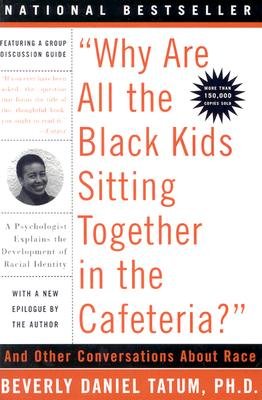
"Why Are All the Black Kids Sitting Together in the Cafeteria?": And Other Conversations About Race by Beverly Daniel Tatum (A book with a color in the title)

I planned to read The Color Purple to satisfy this requirement, but I really wanted to read this and realized with the word "black" in it, it could check off a box too. Win-win. I came across this book in the book store while perusing the African-American Studies section - a tiny, one shelf section of Barnes & Noble, which shares its already incredibly limited space with LGBT Studies. Poor show, Barnes & Noble, poor show. On both counts.

The title grabbed my attention. It's a question I as a white person have always wondered.  It sure did seem like the black kids were always sitting together in high school (not that our school had any black kids, but I noticed it at Forensics tournaments around the state). Isn't that just proof that black people are as racist as white people? I wondered, in my teenage naivete.

Even as an adult, though, I've wondered if we're all trying so hard to be inclusive, why do we still segregate socially? So the book was added to my armload of purchases, and I started it as soon as I got home.

This book is a must-read for anyone who is aiming to become more racially conscious. Though some of it was stuff I already knew - sort of - most of it was extremely eye-opening for me. I knew I receive the benefits of white privilege whether I mean to or not, but I didn't realize to what extent until reading this book. I also knew that institutional racism is a serious issue, but this book highlighted to me how deeply it runs in American society. I knew that other races experience racism, not just African-Americans (and Latinos), but I never realized to what extent and how easily overlooked racism against other groups is, such as Asians and Native Americans.

Talking about race as a white person is hard, because we aren't used to doing it. We may not be actively "racist" but how often do we keep silent out of fear of saying the wrong thing or upsetting certain people? Keeping quiet about an issue that is literally costing black lives is contributing to the problem. I'm still no expert on what I can do as a white person to combat institutional racism, but this book has made a lot of things more clear to me and has given me a deeper understanding of how deeply ingrained racism is in our society. There is no quick fix for the problem, but this book answers a lot of questions, describes the process of developing one's identity (for all people but particularly people of color), and presents suggestions for how we can all be the change we want to see in the world. For me personally, it inspired new ways to discuss racism with my children. It's not enough to teach them to be "color blind" (an impossibility and a logical fallacy); we have teach our kids to be activists, to teach them what racism does to people and to show them real-life examples of racism destroying lives (Tamir Rice, Trayvon Martin, the list goes on far, far too long), so they will grow up to be a generation that actively pushes racism another few steps back towards the history books and away from the day-to-day experience of far too many of our fellow human beings.

This book has also inspired me to read more black authors and introduce more black historical figures to my kids (and myself) besides just the famous ones they'll learn about in school. Those figures are important, certainly, but until now, I've never noticed how whitewashed history is.  We know of only a handful of black historical figures, and the rest are white. This does a huge disservice to us all. It's my mission now to seek out the less well known non-white authors, activists, and historical figures to better educate myself and my kids. (Any suggestions would be welcome!)


To see what else I have read this year:
September
July/August
June
May
April
March
February
January

Sunday, October 04, 2015

Challenge Accepted! September Books

September. Five books read. Since talking to people about the book challenge, I've started to feel rather inferior; I've heard several people claim to read hundreds of books a year, according to their Kindles. Maybe they are telling the truth. But I'm doing well as it is to get through fifty-two in a year, if I can manage it. Five books in September, I think, is doing just fine.

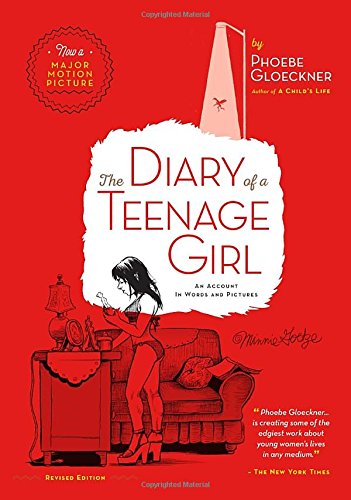
The Diary of a Teenage Girl by Phoebe Gloeckner (A book based on a true story)

You know me and my love of NPR-recommended books.

Well, I listened to the author being interviewed on "Fresh Air". The book is a semi-autobiographical diary of a fifteen year old girl who has a sexual affair with her mother's boyfriend.  Gloeckner found her old diaries from that time in her life and rewrote them to become this novel.  She talked frankly about her experiences in the interview, as a fifteen-year-old girl who thought she was all grown-up (as do all fifteen-year-olds). Her story is incredible and heart-breaking, but the part of the interview that blew me away was when she said this:
Gloeckner: I went to a therapist, I guess I was sent there when I was 15. I think the school wanted me to go, maybe my mother wanted me to go, because I had been kicked out of several schools already and it wasn't clear why. I told the therapist [about the sexual experience] and she was totally freaked out, she was actually a therapist who dealt with childhood trauma ... so I thought she was going to help me, but she just said, "I've met with your mother, I cannot talk to you anymore. I'm going to have to find someone else for you to go to." She didn't report back to my mother, she didn't tell my mother what was going on, she just kind of flipped out. I remember feeling like, "This is too much for adults, they're not going to want to hear it." I was kind of silenced just by the therapist telling me she couldn't deal with it and not really explaining why.

Imagine a young girl, a child really, admitting that she was in a sexual relationship with a grown man and a therapist responding like that! I pretty much ordered the book immediately after hearing the interview. (This has been made into a movie too, which I want to see.)

The book is half graphic novel, half diary.  She sketches everything in her diary from pictures of her bedroom and her backpack contents to explicit drawings of her and her mom's boyfriend naked. (The book now is in the very top shelf of my closet where my kids can't find it!) At times, she goes pages and pages into true graphic novel mode where the plot continues in comic book blocks. The style is very unique.

However, I found the book really disturbing. And it's not really meant to be.  The author writes it from the character Minnie's point of view, which is very haunting for how authentic it is. She also says this after the Foreword:


I was not a hypersexual teenager, not like Minnie is, so I found it hard to relate to personally. But it gave me an insight into the minds and bodies of girls who were.  (Why are boys allowed to be hypersexual teenagers but girls are not?) Anyway, it was disturbing to me how her mother's boyfriend came onto her so shamelessly and how oblivious she was to the wrongness of the situation. And yet even using the word "wrong" feels wrong, as it is written so totally in her perspective that she didn't see it as wrong. Sure she knew it was naughty, and eventually she begins to see it as a little perverted, but overall she believed they were in love and therefore it was all right.

It was hard for me to read this, but I think very important too. I one day will have teenage girls. Will they feel like this inside? Minnie had a poor relationship with her mother and had no adults to talk to about what she was going through. I never want my son or daughters to have no adult to talk to. Maybe they won't come to me (I am their mother), but please let there be someone neutral they can know and trust! (This is part of why I wish we lived in Seattle, where our best friends could be our kids' "other parents" and we could be their children's.)

Anyway, back to the book. It was good, but it had that Lolita quality to it that made you feel a little icky inside for understanding something you morally shouldn't understand. You at once are shocked at Minnie's behavior as well as devastated for her. She is a child being sexually abused by an adult, but she doesn't see it that way. It's so... mm. Just hard to read. And I'm a major prude when it comes to sex, so there's that.

Dying Light by Donald Hays (A book of short stories)

Donald "Skip" Hays was one of my writing professors at the University of Arkansas. He was also my Honors Thesis professor, who helped me write my first book of poems.

I bought this book a few years after graduating. It's been years since I've read it, but so many of the stories have stuck with me over the years. They are so poignant, so raw, so authentic. As I read them again, I was struck once again by the brutal honesty of the stories. Life is messy. Love is not pure. We age ungracefully.

The book seems to be out of print, but there are plenty of used copies available on Amazon. Looking for a book of short stories? I highly recommend this one.

Of Mice and Men by John Steinbeck (A book you were supposed to read in school but didn't)

This was a hard category for me to check off - I was a bookworm in high school and an English major in college! I read all the books! But while perusing the Classics section of Barnes & Noble a few weeks ago, I realized this little gem is one I never did read. It was never assigned to me, but it was definitely a book I should've read in school but didn't.

Many of you will know the story, but briefly, it's about an unlikely pair of day laborers who have a dream of one day owning their own plot of land to live off of.  George is a small, fairly clever man, and Lennie is a large, "simple-minded" fellow. (What is the most PC term for what Lennie was?)

I knew it was a sad story from, you know, not living in a cave, but I've managed to get through life not knowing anything about the book. And when I got towards the end, I spent the last several pages with my hand over my mouth (literally). As I closed the book, I just sat there... Dear God. I didn't know it would end like that.

An Ideal Husband by Oscar Wilde (A book more than 100 years old)

Well, after reading that, I needed something a little more lighthearted. Oscar Wilde it is! My favorite play is The Importance of Being Earnest, but I've never read any of Wilde's other plays. Until now.

An Ideal Husband is as funny as The Importance..., and just about as complicated a denouement, though not quite. I love Wilde's sense of humor. I love how ridiculous he makes his characters and the ridiculous things they say - because everything they say is so true! If we all said things as they really,truly are, we'd all be speaking as if we were in an Oscar Wilde play.

Salomé by Oscar Wilde (A book that was originally written in a different language)

I'll tell you the truth. With only three months left of the year and still a handful of categories to check off, I'm starting to choose books for their length. Salomé is a one act play, and since Wilde translated it from French, it checks another box. Thank you, sir.

It's a tragedy play. It's okay. I wasn't deeply moved or anything by it, but perhaps it would be better performed than simply read. It's the story of King Herod and John the Baptist, shared from the perspective of the King's court. The daughter of the queen, Salomé, becomes obsessed with Jokanaan (John the Baptist - the Hebrew name was used), but when he rebuffs her advances, she becomes vengeful. When Herod asks her to dance for him, promising her whatever she ask for as payment (up to half of his kingdom), she agrees to dance... then asks a terrible price. (In case you don't know the story - not all of you were raised in church! - I won't tell you what she requests.)

It's typical tragedy/ morality-play stuff. It's okay. It was short. That was the main thing. Leaving me time for more hefty books in the next three months. Twelve books to go!

To see what else I have read this year:
July/August
June
May
April
March
February
January

Sunday, September 06, 2015

Challenge Accepted! July and August Books

The end of the year is coming around fast, and I haven't gotten as far along in the reading challenge as I hoped I'd be by this time. But I'm doing not bad either.

July and August were such busy months with me starting my new job and us moving, so I never got a chance to review my July books. Even now, I'm not sure how much of a proper review I'll be able to write, given the distance in time since I read some of them and the lack of time I have right now to write with.  We are trying to get as many boxes unpacked and put away as possible with this long Labor Day weekend. Three days off work means three days of getting the house closer to the way we want it.

So anyway, let's get on with it, shall we?

July Books

The Rosie Effect by Graeme Simsion (A funny book)
Last year in our book club we read The Rosie Project, and I loved it. It was just a fun, quirky story with delightful characters. The Rosie Effect is the sequel which came out earlier this year (or late last year, can't remember).  It's about Don Tillman, a genetics professor with undiagnosed Aspergers, who falls in love with a very unpredictable and fiercely independent woman called Rosie. This book picks up where the last left off, and it did not disappoint.  It was filled with much of the same awkward, cringeworthy situations, good-natured humor, tear-jerk moments, and heart-warming sentiment that I loved about the first book. I hope there will be a Rosie Book 3. I will definitely read it!

Dreams from My Father by Barack Obama (A non-fiction book)
I loved this book. Loved it.

I read about half of The Audacity of Hope and expected this to be much of the same, but it was entirely different. Dreams from My Father is an autobiography, plain and simple. Well, not plain and simple; it's so much more than an autobiography. It's an important commentary about race in America.

Obama starts his book with his youngest memories of childhood, a black boy living with his white mother and white grandparents who grew up listening to stories about his Kenyan father whom he didn't actually meet until he was ten years old.  He takes us through his formative years - a couple of elementary school years in Indonesia, middle and high school in Hawaii, college in California, working in New York and Chicago, and finally his first visit to Kenya.  All through the book he illustrates his struggle as a black man from a white family trying to figure out just who he is and what he was meant for.

While I did get bogged down a bit during the long section about his job as an organizer in Chicago, the whole book felt important, like something that no one is talking about but should. Or perhaps something people are talking about but in the wrong way. I had to take the book very slowly because every chapter left me with something bigger than myself to dwell on and work through. So much that I'm going to have to go back and read it again sometime soon. I don't feel like I can even adequately review the book, because my experience as a white person is so limited and so privileged. All I can say is, whether you like Obama the politician or not is not the issue with this book. This book is entirely unpolitical. It's about a man and his struggle to come into his own and to find himself in a world he never seemed to fit into. It's well-written, thoughtful and careful, and emotionally stirring.

(A side note: What I would've given to see the look on his Kenyan family's faces when their own Barry was announced President of the United States! I imagine them saying, "He's an Obama! He was made for big things!")


August Books

Incognegro by Mat Johnson (A graphic novel)
Like so many books these days, I learned of this one via NPR.  Mat Johnson was being interviewed by Terry Gross on his latest novel, Loving Day, and they referred often to his first graphic novel, Incognegro. I decided that would be my graphic novel.

Only problem was, it's out of print, and all the copies I could find online were running $50-60 bucks. Erm...

But I kept looking and finally found it for $20, and I snatched it right up.

It's the story of a black journalist with such fair skin that he goes undercover as a white man to investigate lynchings. He is tired of the job though and decides it's time to move on - until his boss gives him one last assignment...

I had no idea that a graphic novel could pack such a punch.  The artwork was horrifying, and the story was agonizing. I actually felt sick to my stomach at parts, the reality of recent history making itself plain to me in the gory images of lynchings and the unthinkable things whites did to blacks - and not all that long ago.

This isn't an easy book to get a hold of, but it was really incredible. It's also opened up the world of graphic novels to me. While I doubt I'll be delving straight into Batman any time soon, I have started reading my second graphic novel - to be discussed in September's books!


God Help the Child by Toni Morrison (A book from an author you love that you haven't read yet)
After reading Disgruntled and Dreams from My Father, I started looking for more books written by black authors about black lives.  Toni Morrison's Beloved is one of my favorite books, so when I heard her interviewed (on NPR of course) about her new novel (she's in her eighties!), I got very excited.  Morrison usually writes about the past, and I believe this is her first novel set in the present. It was a little bizarre; it had all the most modern cultural references, but she still wove in the mystical as if it were the practical in the way she so seamlessly does.  

This book is about Bride, a very dark girl ("Sudanese black") born to a fair skinned mother, Sweetness, who couldn't properly love her for her skin tone.  Bride grows up to be a very successful young woman, but the scars of her loveless childhood never really heal. As she tries to assert herself and leave the past behind, she only becomes more and more the child she is fighting to no longer be.  In the meantime, Sweetness watches her daughter keep her cold distance, and it slowly, vaguely occurs to her that "what you do to children matters. And they might never forget."


Losing My Religion: How I Lost My Faith Reporting on Religion in America and Found Unexpected Peace by William Lobdell (A book with antonyms in the title)
I actually found this book by Googling "books with antonyms in the title". Having just written and published my own deconversion story, I figured it was now safe to read others. I'd kept very clear of any books like this while writing my own for fear of being influenced by them.  I wanted my book to be pure and honest and entirely my own; I didn't want their words and emotions to seep into mine.

It's a good thing I made that my plan, because I found myself nodding and murmuring "uh-huh" and "mm-hmm" the whole way through.  The specifics were different - he became a believer as an adult and was drawn to the Catholic church, and his faith fell apart after years of reporting on corruption in organized religion - but our hearts seemed to have been in the same place and dealing with the same things.

I wrote my book to make others in the same situation feel less alone. Reading this book returned the favor.  I felt after reading it that I was comforted this time around. It was a pretty good feeling.


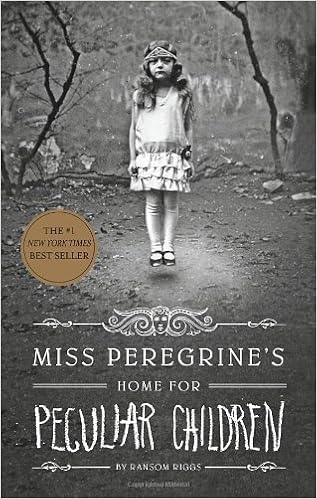
Miss Peregrine's Home for Peculiar Children by Ransom Riggs (A mystery or thriller)
Mysteries and thrillers are not my genre. I don't like being scared, and I don't like suspense.  So Miss Peregrine's is simply going to have to be the book that checks this category off. It's mystery enough to count, I think.

Jacob travels to the island of his beloved grandfather's childhood to unlock the secrets of his grandfather Abe's dying words to him. He has long stopped believing his grandfather's wild and impossible stories, but what he finds on the island changes his life forever.

The book combines authentic vintage photography with a plot line that is interesting, mysterious, and engaging. The unique photography adds enormously to the story line. I picked this up on a whim in the book store, and I really liked it. It's got a few choice words, so it won't be eight-year-old Fifi-worthy just yet, but in a few years, I hope she pulls it from the shelf and loves it. It's a book I look forward to sharing with my wee readers.


To see what else I have read this year:
June
May
April
March
February
January

Friday, July 31, 2015

Reading Challenge Update

When I committed to the 2015 Reading Challenge of reading 52 different books with specific requirements, I half expected to totally drop out.  Where was I going to find time to read 52 books? And in genres that I've never had any interest in, like sci-fi or graphic novels?

But lo and behold, it's the last day of July, and I'm halfway through. With almost half a year to go, I only have 23 left to read. Which, actually suddenly makes it sound like a lot...

Here's the categories I have left to tick off (some with the qualifying book already scheduled):


A book with 500 pages (Corelli's Mandolin by Louis de Bernieres)
A classic romance (Time to re-read my old favorite,Bronte's Wuthering Heights)
A book with a number in the title (Unless I come across something else, I plan to re-read Dickens' Tale of Two Cities)
A funny book (Reading right now, The Rosie Effect, sequel to The Rosie Project by Graeme Simsion)
A mystery or thriller
A book of short stories (I left two of my favorite books of short stories, Dying Light and The Lives of Kelvin Fletcher, in Scotland, so this might be my chance to repurchase. Both written by Arkansas authors who taught at my university, Donald Hays and Miller Williams respectively)
A book set in a different country (Things Fall Apart by Chinua Achebe)
A book from an author you love that you haven't read yet (God Help The Child by Toni Morrison)
A Pulitzer Prize-winning book
A book based on a true story (12 Years a Slave by Solomon Northup)
A book your mom loves (The Girl With the Dragon Tattoo by Stieg Larsson)
A book that scares you (Maybe, if I can face it, Kiss The Girls by Alex Cross)
A book more than 100 years old
A book you were supposed to read in school but didn't (But I read them all! Can I count college?)
A book with antonyms in the title (Losing My Religion: How I Lost My Faith Reporting on Religion in America and Found Unexpected Peace by William Lobdell)
A book that came out the year you were born (The BFG by Roadl Dahl - going to read it to the kids out loud)
A book set in high school 
A book with a color in the title (The Color Purple by Alice Walker. Always wanted to read that.)
A book with magic (Either going to read Tolkien's The Hobbit for the first time or re-read Rowling's Harry Potter)
A graphic novel (Incognegro by Mat Johnson)
A book that was originally written in a different language
A book set during Christmas (Dickens' A Christmas Carol. Never actually read it before!)
A book you started but never finished (That could be any number of books currently on my shelf - maybe Warriors, the book about cats by Erin Hunter that my 8-year old Fi really wants me to read)


I also need to figure out how to fit Still Life With Woodpecker (Tom Robbins) in there, our next book club book.

I'll take suggestions on any topics with no book!

And on that note, I'm off to read. I'd like to finish The Rosie Effect this week and get back up to my minimum five books a month in order to finish this thing out! Only got two each in for the months of June and July!


Wednesday, July 08, 2015

Challenge Accepted! June Books

June. Oh June. I read only two and a half books.

Catching Fire by Suzanne Collins (A book with a love triangle)
Continuing along with The Hunger Games series, I read Catching Fire, the second book. I think I possibly liked #2 better than #1. I don't want to give any spoilers, so I'll just say A) the characters in this one were all so much more interesting, complex, and diverse and B) the love triangle sucked. Gale? Seriously? I'm #TeamPeeta all the way.

I mentioned last month that Fi wanted to read the series too. I went ahead and let her. She whizzed through The Hunger Games and has now started Catching Fire. She used to want to be Hermione Granger and do magic. Now she wants to be Katniss Everdeen and shoot arrows.

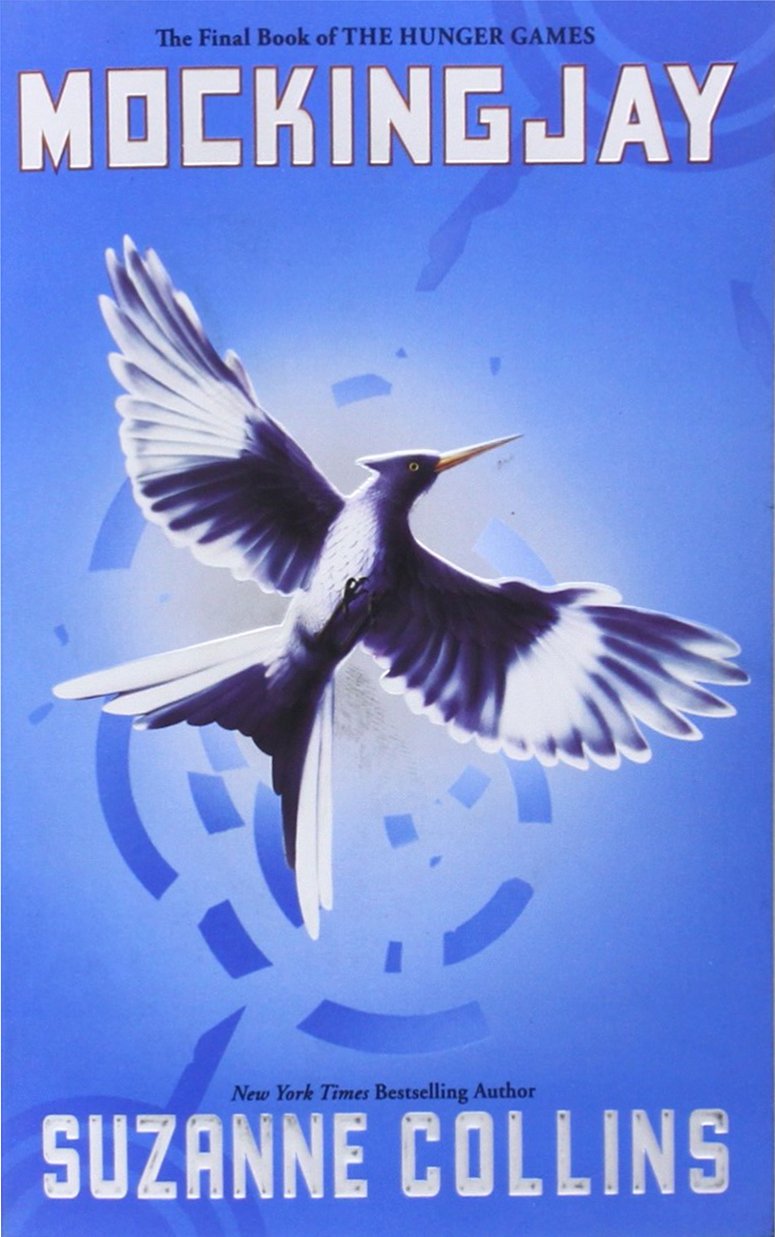
Mockingjay by Suzanne Collins (A book by a female author)
As for checking off Reading Challenge categories, yeah, I'll admit it, I had to stretch for this one. It was the only way I could simultaneously finish the series AND check off a box. "Book by a female author" ... it was always going to be a throw- away.

I didn't enjoy this one. It must be a YA trilogy thing, but I just don't enjoy the way the third part of these stories unfolds. Death and destruction, rebellions, endless warfare. Bleh. I felt the same way about Mockingjay as I did about Allegiant in the Divergent series. I soared through the first two books then had to trudge through the last. It took me a while to finish it. I will say this: the ending to this series is far more satisfying than the end to the Divergent series.


As for movies, I watched Mockingjay Part 1 after finishing the books and was okay with it. It wasn't great, but it was entertaining. As usual, though, the book was better. (And I didn't even like the book, just Katniss and Peeta. And Haymitch. Haymitch is my favorite. Katniss should've ended up with Haymitch. Just sayin'. I've got a whole theory about this.)

Also, Fi may be allowed to read the books, but she will NOT be allowed to see the movies. It's one thing to read about blood with an imagination of an eight year old who has never seen such gory images and therefore can only take it so far in her mind (or even let them pass over completely). It's another to see those images in all their horrific detail, thus imprinting them in her innocent little brain. She can watch them when she's older. A policy she thinks is totally unfair and preposterous.


I did start reading a third book last month, but I'm still only half way through. I'm reading Dreams From My Father by Barack Obama (Mr President himself), but it's a little dense (in a good way) and very thought-provoking. The main theme throughout is race, particularly what it's like being a black man in America, even more particularly, a black man with a white mom and white grandparents trying to figure out where he belongs in America. It's so full of things to think about and ponder over that it's taking me some time to get through it. I read a chapter, then have to sit on it. Hopefully I'll be finished with it soon. If I only read two books a month, I'll never complete the challenge! I'll do a more comprehensive review on Dreams... at the end of July.


To see what else I have read this year:
May
April
March
February
January

Thursday, June 04, 2015

Challenge Accepted! May Books

The month of May already seems so long ago. Some of these books feel like books I read ages ago, not just a few weeks ago. So apologies for the lack of totally awesometastic reviews.

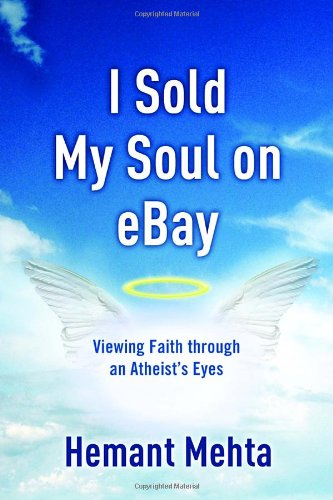
I Sold My Soul On eBay by Hemant Mehta (A book written by someone under 30)
I'd heard of this book a while back and started following The Friendly Atheist Hemant Mehta's YouTube videos. Later I started following his blog too. Now, I have even had some correspondence with him, in which he agreed to read my book and write a testimonial for it. It was high time I read that book that I'd heard of so long ago.

Mehta was first known as "the atheist who sold his soul on eBay". He explains in the book how, though he'd left his own religion as a youth and had become an atheist, he knew very little about other religions, Christianity in particular. He decided if he wanted to be sure of his atheism, he ought to look into other religions' understanding of God as well. He came up with the idea of auctioning off Sunday visits at church on eBay. For every $10 bid, he would spend one Sunday visiting the church of the bidder's choice. Expecting to get maybe a few bids tops, this seemed an easy enough experiment. Little did he expect the massive media response and a final bid of over $500. He was a little worried about 50 weeks of church, but the winning bidder was Jim Henderson, a former pastor and author of Evangelism Without Additives, who only requested he visit 15 churches of his choice and write reviews of them for his website.

Mehta visited churches of all shapes and sizes, from small country chapels to internationally renown megachurches. In this book, he breaks the churches into 4 categories, divided by size, and writes about his experiences, opinions, and suggestions for them as an atheist. He is pretty fair too. He writes about what he liked about each church and what he thinks would be better improved.

It was interesting for me, as someone who has been to so many churches myself, but always as a believer. In fact, that's the target audience of this book - believers. It was even published by a Christian publishing house with a foreword by Rob Bell. He does offer some great insights and advice.

As a former believer myself, though, I noticed a few areas in which it's obvious Mehta himself was never a Christian. (He was a Jain.)  For instance, one of the things he likes least is when pastors spend an inordinate amount of their sermon quoting and reading Scripture. He felt it was hard to apply these sermons to his own life and preferred pastors who took a single verse or two and expounded upon it with information that was applicable to his life. This of course makes sense for an outsider, but for the insider, a Scripture-heavy sermon can be far more appealing to some Christians (like I was once). I know I hated "fluff" sermons but devoured the Scripture-laden ones. I felt those were the ones that were the "meatiest", and those churches were the most in-tune with God. To each his own, I suppose.

He also didn't like the services that spent a significant amount of time in singing. Once again, I think he missed the point. For believers, at least those like me, the singing is the best part, the part where we really poured our hearts out to God. It was deeply meaningful, even if the chorus was repeated a dozen times. For outsiders though, it was repetitive and way too long. He would like to see the singing end a little sooner with a lot less repetition. Maybe a lot of people do get bored with that part, but for many, that part could last all day.

On the other hand, he was spot on about just about everything else. I particularly (now) sympathize with his indignation of churches that called him "lost" and made him and other believers out to be sad, misguided, even evil people. That is my pet peeve now too. I never realized how insulting being called "lost" is. As a believer, I guess I never thought of the "lost" people in the audience hearing that as anything other than true, as if they were sitting there thinking, "Gee, I really AM lost... now do I get saved or harden my heart?" But I'll just reiterate what Mehta said - since becoming an atheist, I've never felt more "found" in my life!

The book is full of good suggestions, and to each church he had something complimentary to say. He really tried to get something out of each one. Some he enjoyed much more than others. Some gave him something to chew on as he went home. But ultimately, while he got a better understanding of the Christian faith, and even came away with some great life lessons, his atheism was not changed.

I recommend this book to believers and non-believers alike. If you want to know how your church comes across to outsiders, it's worth a read. He won't offend you. I'm serious. He isn't called "the friendly atheist" for nothing.


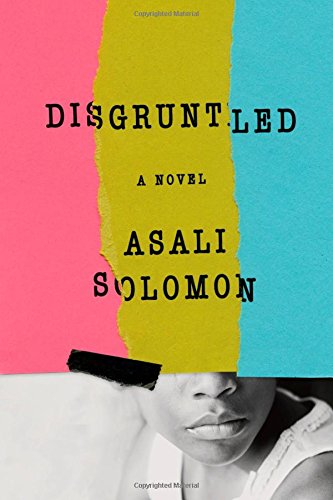
Disgruntled by Asali Solomon (A book published this year)
This book is good. I mean really good. I heard about it, like I hear about so many books, on NPR's Fresh Air. Asali Solomon was being interviewed about her debut novel Disgruntled, and the interview made me excited to read it. I had to wait until it came out, and then I had to wait until I had a spare $25 for the hardcover version, the only version currently available, but once it arrived, I couldn't wait to dive in.

The story follows young Kenya from childhood into early adulthood. Kenya was different. Not because she was black - there were lots of black children in her school - but because she celebrated Kwanzaa instead of Christmas and wasn't allowed to say the Pledge of Allegiance and didn't eat pork and didn't go to church. Her parents were black-nationalists, and Kenya was made fun of horribly for her family's beliefs. It's a coming-of-age story, with descriptions of all the childhood moments we can all relate to, regardless of race or religion. I loved that about the book. Solomon describes moments such as laughing and making fun of other kids even while on the inside knowing you too are the exact thing that you're making fun of, but not knowing what to do about it, you just keep on taunting to fit in. She describes the feeling of liking someone so much and thinking maybe they like you back and analyzing everything they do and say to figure it out, reminding you that if you are lucky enough to not be a teenager anymore, you would never want to be one again.

But more than that, I also loved the insight it gives into race and what it's like to be black or any other minority. Face it, when you're white and live in suburbia, you just don't have a clue. Sure you might "know" what kind of issues race poses, you might "understand" what others are feeling and experiences, but really, you can't truly "get" it when you've never been there. This book draws you deep, deep into Kenya's mind and heart, and you feel for a second you actually sort of "get" it.

I loved the characters, loved the story line, loved the realism, and was sad when the book ended. I wanted more. I want to know what happens to Kenya ultimately. What does she grow up to do? Who does she meet? What happens with her parents?

Consider this my definite recommendation for a book to add to your reading list.


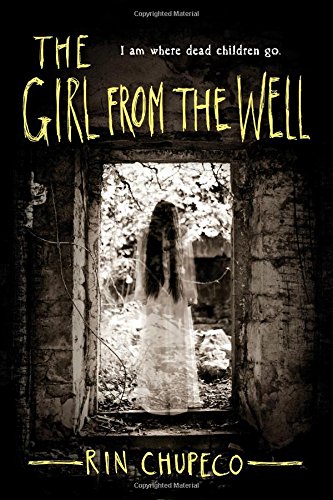
The Girl From the Well by Rin Chupeco (A book based entirely on its cover)
This one was supposed to satisfy the "Mystery or thriller" category, but it was anything but scary or thrilling. It was somewhat mysterious. But truth be told, it was an impulse buy while getting groceries at Kroger, and I did indeed pick it based on it's cover. It said something about being a mixture of The Ring and The Grudge, both of which scared the poo-poo out of me, so I bought the book.

It was maybe like The Ring or The Grudge if those movies had been written for and by twelve year olds. Like The Shakespeare Stories did for Shakespeare. But I still confess I enjoyed the book, in a light-reading kind of way. The story is told through the point of view of the ghost of Okiku, a Japanese servant girl several centuries dead. She is the kind of ghost who avenges child murders, but when she meets Tark, a moody teenage boy with a strange essence, she begins to change.

Dun dun DUN!

But seriously, it's a book to read on the beach or in a bath, but don't bother if you're looking for something thrilling. Unless you're a twelve year old, though you might find R.L. Stine's Fear Street series more exciting. (Gawd, those used to scare me to death.)


Dress Your Family in Corduroy and Denim by David Sedaris (A book a friend recommended)
I found this book in my bookshelf when I was arranging it a few weeks ago. I pulled this out and didn't recognize it at all. Where did this come from? Then I vaguely recalled my friend Devon lending it to me when I first moved back to the States, after lamenting to her how few books I had. She said it was funny; I put it somewhere and then completely forgot about it.

It looked easy enough, and with only a week left in May and not a lot of books to show for it, I decided to go for it. It's a collection of humorous memoirs, easy to digest quickly. At first, I didn't enjoy it. The first couple of stories came across to me as failed attempts at funny. The testimonials on the back promised gut-busting laughter and hilarity, and I just didn't really think it was funny at all. Until the third story, where an unexpected laugh broke from my chest. And as I went on, I came across moments that did elicit a good chortle from me. I began enjoying it a lot more, appreciating his sardonic humor. He makes fun of everyone and give no one a pass. I thought as I read it, "I could never be this disparaging to my family and friends! And therefore I will never be a comedic memoirist." I had to respect his lack of respect. It takes a lot of guts to make fun of your poor mother and father so much, your poor siblings so much, your poor life partner. It's easy to mock yourself, but to mock the people you love, who will groan and be pissed and slam the door in your face when they see what you've put in print? Heroic.
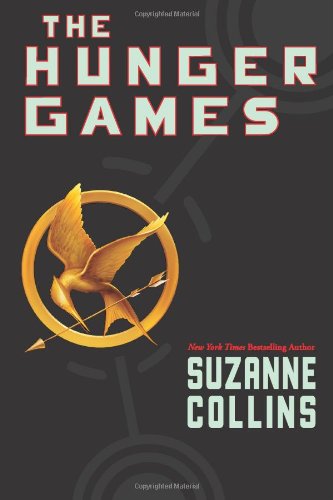

The Hunger Games by Suzanne Collins (A book by an author you've never read before)
My daughter, Fi, has just worked her way through the Harry Potter series for a second time, and we figured it was time to introduce her to something new. The problem with an eight year old who reads on an eighth grade level is that books that are appropriate for her age are too short and easy, but books for her reading level are too mature. She wants to read The Hunger Games, but I need to read them first to see how mature they are. And I'll admit it, I wanted to read them myself anyway!


I've seen the first two movies, so I knew roughly how the book was going to go, but it's been a while, so a lot of things were still a surprise to me - even the end! I vaguely remembered how it ended, but I actually gasped at the dénouement.


It's easy reading but highly entertaining. This must be the thing with dystopian YA. It reminded me a lot of the Divergent series, right down to the first-person-present-tense. (What's with YA and first-person-present-tense?!) It didn't bother me most of the time though, which means Collins did it well enough.

I'm sure everyone knows what the story is about, but in case you don't: Once again, we are taken to a future dystopian society where the common people are treated poorly by the reigning, wealthy class. In this case, people are divided into districts, and each year, to remind the districts what happens when they rebel, the Capitol holds The Hunger Games, in which two tributes from each district are chosen to fight each other to the death on live TV in a controlled arena full of deathly hazards. Katniss Everdeen and Peeta Mellark are chosen from District 12, two people who barely know each other but still have a lot of connections and a little history. They are trained briefly then let loose in the arena to fight all the other tributes from all the other districts.

I'm now reading the second book in the series, checking off another box in the Reading Challenge, but to say which one would give too much away!

I am also of the opinion that at least Book 1 will be okay for Fi to read. It isn't as bloody as the movie (though there is definitely blood and death, but nothing she didn't find in the later Harry Potter books).  The second one however might have some more mature romance themes, but I'll know how I feel about those after I'm finished.  (The romance is the only reason I haven't handed Fi the Divergent books. I'm no prude, but I don't think my eight year old is even remotely interested in kissing yet, judging by the EW!s she cries while watching Disney teeny-bopper TV.)


To see what else I have read this year:
April
March
February
January
Thursday, April 30, 2015

Challenge Accepted! April Books

If I was a little let down by only reading four books in March, I'm feeling really let down by my April accomplishments. Only three.

HOWEVER. One of those books was pretty long and dense, so that has to be factored in.

Angle of Repose by Wallace Stegner (A book that made you cry)
I recently wrote about this book's personal effect on me, but for the purposes of this post, I'll just give a quick synopsis. 

Historian Lyman Ward, who suffers from a debilitating skeletal disease, embarks upon a project of writing the life story of his grandparents, Susan Burling Ward and Oliver Ward, gathering the majority of his information from the extensive correspondence between Susan and her life long friend Augusta.  Susan, an Eastern genteel, and Oliver, an aspiring engineer with no college degree, marry after a long and unconvincing "courtship" that existed almost entirely in letters, and she joins him in their first homestead in the West in the late 1800s. As far as Susan sees it, this is a temporary settlement while he gets the experience he needs to return to New York and become an engineer in the East.  He, however, thought she understood that an engineer's life was in the West and always would be.  And thus begins a life of disappointments, successes, stalled work, poverty, hope, love, regret, friendships, loneliness, disaster, and exile.  Amidst the stories of Susan and Oliver's erratic and restless lives, Lyman must also wrestle with the reality of his own life - a failed marriage, a failing body, a meddlesome son, a ridiculous secretary, and a faithful but aging friend/nurse.  He is living alone in the very house his grandparents lived in for the last half of their lives, among the same roses his grandfather cultivated, the same roses whose scents hung in the air as heavy as the memories they carried.

This, in my opinion, is an absolutely fantastic book, one of the best I've ever read.  It is dense and rich, and so very cognizant of the human condition.  Stegner goes right down into the thick of what it is to be married and the cracks and craigs that can develop so very easily.  Even though the majority of the book is based over a century ago, Stegner also manages to draw the reader right into the Victorian era, forgetting our modern philosophies and beliefs about equality and the Women's Lib, and relive life the way it was then with no distaste for their archaic values.  In fact, we become almost nostalgic for it.  

I have read this book three times now, and every single time it has reduced me to tears.  And not just stingy-eye-tears, but full-on sobs, fat plops smearing the ink of the pages, bright red puffy eyes, dripping nose, the works.  I re-read it this time because our book club chose it as our next book. (We all submitted titles and chose one at random. Can you guess who submitted this one?!)  I truly hope the rest of Book Club will love it as much as I do, and I eagerly await our discussion!

Orange Is the New Black by Piper Kerman (A book based on or turned into a TV show)
If you haven't already watched Seasons 1 and 2 on Netflix, perhaps consider reading the book first. I wish I had.

The book is a memoir, the true story of Piper Kerman's year in a women's prison. It is heartfelt and compassionate and nothing at all like the TV series.  It is not over dramatic, we do not witness any fights or lesbian sex scenes, and the Piper "character" is not as troubled as they portray her on the show. Also - SPOILER ALERT -Larry is faithful.The book re-humanizes the women behind bars that we so often dehumanize because of their crimes.  It reminds us that punishment without rehabilitation is only cruelty.  It highlights the serious ineptitude of America's prison systems, as well as the disservice it does to society, when it perpetuates the cycle of violence and incarceration.  Until America realizes that pure punishment alone does not solve the problem, we will always have people cycling in and out of prison, unable to cope with life "on the outs".  Prisons must do a better job of rehabilitation if we want to see these people living productive and non-criminal lives. (And it should never have become a profitable "business".)

The TV show is great entertainment, but other than some of the characters and scenarios, it is not the same as the book.  Which is better? It depends on what you call "better".  If you ask me, the Netflix Original Series is more exciting, but the book touches your heart and engages your empathy.


The Perks of Being a Wallflower by Stephen Chbosky (A banned book)
Again, another book with a movie-based-on-a-book.  I saw the movie first and read the book second. I gotta stop doing that.

I chose this as my "banned book". I chose it over several other more classical and well-known banned books, because I love the movie so much.  I figured I knew why the book would be banned in many high schools across the state - it deals with drugs and sexuality - but I wanted to know just how "bad" those concepts are in the book.

Spoiler - not bad at all. Aside - don't ban books because they deal with actual human dilemmas, particularly teen ones.

Charlie, a lonely high school freshman, whose close friend shot himself the year before, meets two seniors, Sam and Patrick, who take him in and show him genuine friendship, in spite of his quirks (and tendency to cry a lot).   It quietly and honestly tells Charlie's story through letters he writes to a "friend".  (Charlie needs an anonymous and understanding person to talk to. We know nothing about this friend, and this friend actually does not know Charlie.)  He talks about his first time getting high, his first kiss, his first girlfriend, his love of books and desire to become a writer, and true love and friendship.  The book is warm, but has an undercurrent of something unsettling. We get the sense of foreboding but cannot be sure why.

I liked this book, but again, it's a little different from the movie.  Obviously.  Movies must dramatize everything to keep the viewer constantly holding his breath.  The book does not feel the need to do so. It plays everything down, with Charlie telling anecdotes to his "friend" with a mixture of youthful naivety and insight beyond his years.  It made me glad I'm not sixteen anymore. It made me frown and sigh at the thought of anyone ever having to be sixteen.

It should not be a banned book. (Should any book?)  Kids need to be able to read this stuff. Kids, more than anyone, need to know they are not alone in their struggles.  This will be required reading for my little ones when they start to become a lot less little.


To see what else I have read this year:
March
February
January